Amber Flashing Beacon on a Dual Carriageway: Which Vehicles?
An amber flashing beacon on a dual carriageway means a slow vehicle such as a tractor. The theory test answer, the 25 mph law and what drivers should do.
In this guide
A vehicle showing an amber flashing beacon on a dual carriageway is a slow-moving vehicle, such as a tractor, a mobility scooter or a piece of plant with a maximum speed of 25 mph or less. On an unrestricted dual carriageway (one with a speed limit above 50 mph) these vehicles must show a lit amber beacon by law, so expect to close on them quickly.
This is a common driving theory test question. Below is the answer, the law behind it, and what to do when you come up behind one.
What type of vehicle uses an amber flashing beacon on a dual carriageway?
The theory test answer is a slow-moving vehicle. Depending on the version of the question, the correct option is usually “a tractor” or “a mobility scooter”, because both have a maximum speed well under 25 mph.
Typical slow vehicles you will see with a beacon on a dual carriageway:
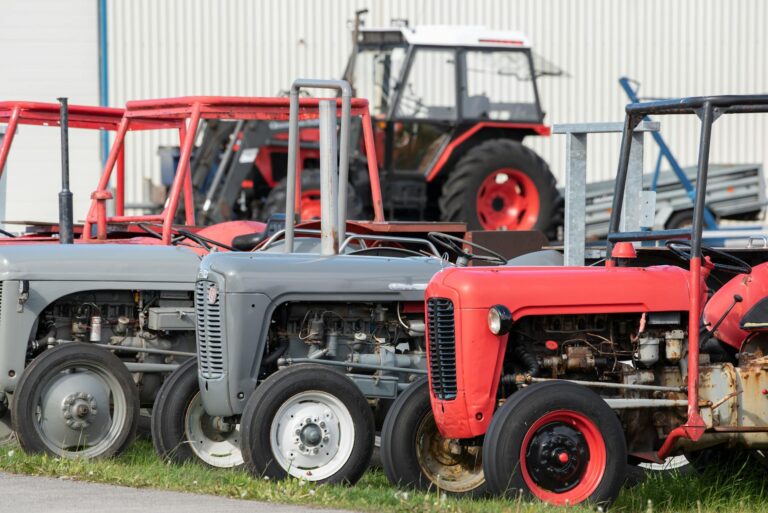
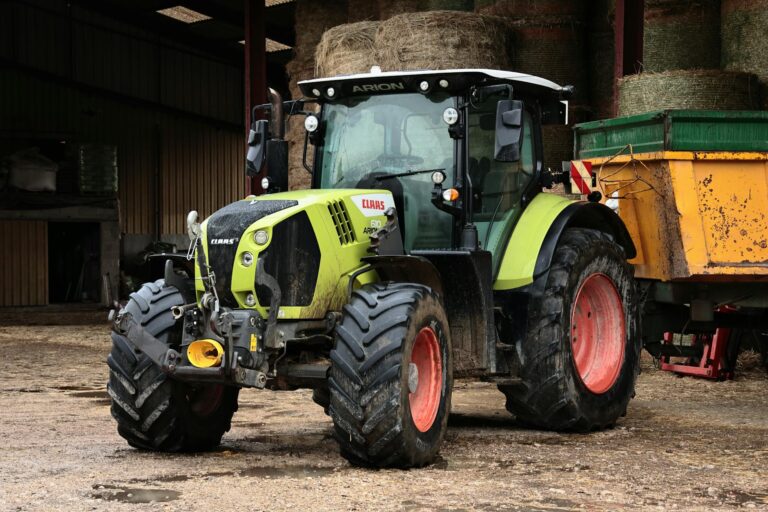
- Tractors, with or without trailers, most of which have a maximum speed of 40 km/h (24.9 mph) or less
- Combine harvesters, self-propelled sprayers and forage harvesters moving between fields
- Road rollers, excavators, dumpers and other plant driven on the road
- Mobility scooters (Class 3 invalid carriages), limited to 8 mph
- Gritters, road sweepers and highways vehicles working in or near a lane
- Recovery trucks attending a breakdown, and abnormal loads with escorts
What does it mean when a moving vehicle is showing a flashing amber beacon?
It means the vehicle is moving slowly. Highway Code rule 225 says amber beacons “warn of a slow-moving or stationary vehicle” or abnormal loads, so approach with caution. It is not an emergency vehicle and you do not need to pull over.
What does the law say?
The legal requirement is regulation 17 of the Road Vehicles Lighting Regulations 1989 (RVLR). It says a motor vehicle with 4 or more wheels and a maximum speed not exceeding 25 mph must not be used on an unrestricted dual-carriageway road unless it, or a trailer it is towing, is fitted with at least one warning beacon showing an amber light. Regulation 26 adds that every such beacon must be kept lit while on that road.
Highway Code rule 225 gives the same rule in plain English: on unrestricted dual carriageways, motor vehicles first used on or after 1 January 1947 with a maximum speed of 25 mph (40 km/h) or less, such as tractors, MUST use a flashing amber beacon. Rule 220 says the same for powered vehicles used by disabled people.
| Point | What the rule says | Source |
|---|---|---|
| Which vehicles | Motor vehicles with 4 or more wheels, maximum speed not exceeding 25 mph | RVLR reg 17(1) |
| Which roads | Unrestricted dual carriageways (speed limit over 50 mph) | RVLR reg 3 and 17 |
| Where the beacon goes | On the vehicle or on the trailer it is towing | RVLR reg 17(1) |
| Must it be on? | Yes, kept lit the whole time | RVLR reg 26 |
| Exemptions | Vehicles first used before 1 January 1947, and crossing the dual carriageway by the quickest practicable route | RVLR reg 17(2) |
| Beacon standard | Centre at least 1,200 mm high, visible all round, 60 to 240 flashes per minute | RVLR Schedule 16 |
Does the rule apply on all dual carriageways?
No. The obligation only applies on unrestricted dual carriageways, which RVLR defines as a dual carriageway where a motor vehicle may lawfully be driven at more than 50 mph. On a 40 mph urban dual carriageway the beacon is not compulsory, although regulation 27 allows a slow vehicle to use it whenever it is necessary or desirable to warn other drivers, and most tractor drivers leave it on.
Why is the speed threshold 25 mph?
The 25 mph threshold is the vehicle’s maximum speed by construction, not the speed it is being driven at. Under the Construction and Use Regulations, maximum speed is the speed the vehicle cannot exceed on the level, under its own power, when fully laden.
That is why most standard tractors are caught. A tractor whose maximum speed by construction is 40 km/h tops out at 24.85 mph, inside the threshold; one that can actually go faster than 25 mph is not. On a 70 mph dual carriageway, a car closes on it at around 45 mph, which is about 20 metres every second. The beacon gives following drivers the early warning they need to slow down and change lanes in good time.
A high-speed tractor with a maximum speed over 25 mph, such as a 50 km/h model, is not caught by regulation 17. It is not in the 25 mph group of the regulation 11 amber list either, so it may only carry an amber beacon if it qualifies another way, for example by being over 2.9 m wide including its load. A tractor driving slowly because it is heavily loaded does not become a 25 mph vehicle either.
What should you do when you see one?
Treat an amber beacon on a dual carriageway as a vehicle you will reach far sooner than you expect.
- Check your speed and mirrors early. Judge the closing speed, not just the distance.
- Move to the right-hand lane in good time if it is clear, rather than braking hard at the last moment.
- Watch for wide loads. Combines and wide implements can overhang the lane line.
- Expect slip road and gap movements. Tractors often join, leave or cross the carriageway at farm gaps and minor junctions.
- Do not stop or pull onto the verge as you might for an emergency vehicle.
Advice for tractor drivers on dual carriageways
If you drive a tractor on a dual carriageway, check the beacon works before you leave the yard and switch it on before you join. Make sure it can be seen from behind: a high bale trailer or a tall load can hide a cab-mounted beacon, and Schedule 16 requires the light from at least one beacon to be visible from any point around the vehicle and trailer. A second beacon on the trailer, or a magnetic beacon on the rear of the load, solves that. Browse our amber tractor beacons or the full tractor beacons range.
For the full meaning of amber beacons on any road, see our guide to amber beacon meaning. To compare amber with blue, green and the other colours, see beacon colours explained. For other situations where farm vehicles need beacons, see when amber beacons are legally required on tractors.
Frequently asked questions
Which vehicles must use a flashing amber beacon on an unrestricted dual carriageway?
Motor vehicles with 4 or more wheels and a maximum speed of 25 mph or less, such as tractors and slow plant, must use a lit amber beacon on an unrestricted dual carriageway. Mobility scooters must too, under Highway Code rule 220.
Should a flashing amber beacon be used on all dual carriageways?
The law only requires it on unrestricted dual carriageways, where the speed limit is over 50 mph. On other roads a slow vehicle may still use its beacon to warn traffic, and it is sensible to do so.
Does a tractor crossing a dual carriageway need a beacon?
No. RVLR regulation 17 exempts a vehicle that is on the dual carriageway only to cross it in the quickest manner practicable. Using the beacon while crossing is still good practice.
Can the beacon be on the trailer instead of the tractor?
Yes. Regulation 17 accepts a beacon fitted to the tractor or to any trailer it is towing, provided the light from at least one beacon is visible from any point around the combination.