Tractor lighting guides
Tractor lighting guides explain what each lamp on a tractor does, what UK law requires when the tractor uses the road, and how to choose, wire and fit replacement and upgrade lighting. The section covers 33 guides across five sub-sections: light types, technical and wiring, buying and comparison, safety and the law, and new lighting technology.
105 guides
- Safety & Regulation
Red and White Reflectors: Where They Must Be Fitted by Law
A reflex reflector is a passive device that returns light back towards its source, making a vehicle visible to other road users...
- Safety & Regulation
Lighting Offences for Agricultural Vehicles: Fines and Enforcement
A lighting offence is a breach of UK vehicle lighting law that carries a penalty when an agricultural vehicle uses a public...
- Tractor Lighting
Tractor Sprayer Lights: Illumination for Late-Season Spraying
A sprayer light is a work lamp fitted to a crop sprayer to illuminate the boom, the nozzles, and the working area...
- Tractor Lighting
Tractor Light Switch Replacement: Troubleshooting and Fitment
A tractor light switch is the electrical control that routes battery power to the tractor's lamps. The switch sits on the dashboard...
- Buying & Comparison
Beacon Buyer’s Guide: How to Choose the Right Warning Light
A warning beacon is an amber flashing or rotating light fitted to slow-moving and working vehicles to warn other road users. Choosing...
- Buying & Comparison
Premium Tractor Lighting Setup: Full Upgrade Guide
A premium tractor lighting setup combines LED headlamps, high-output work lights, a roof light bar, full rear lighting, and an ECE R65...
- Buying & Comparison
Britax Beacons and Warning Lights: Brand Guide
Britax is a UK warning light manufacturer that makes amber beacons and light bars for agricultural, commercial, and construction vehicles. The brand...
- Buying & Comparison
LED Autolamps: Product Range and Agricultural Applications
LED Autolamps is an LED vehicle lighting brand that designs and manufactures tail lamps, marker lamps, work lights, and interior lamps for...
- Buying & Comparison
VIGNAL Lighting: What They Make and Where They Fit
Vignal is a French vehicle lighting manufacturer that supplies signalling and work lights to trucks, trailers, and agricultural machinery across...
- Technical & Performance
Adding Extra Lights to Your Tractor Without Overloading the Circuit
Adding extra lights to a tractor without overloading the circuit needs three calculations and one design choice. The first calculation is the...
- Technical & Performance
Fuses and Circuit Protection for Vehicle Lighting
A vehicle lighting fuse is a sacrificial component sized to interrupt the circuit when current exceeds a safe level. The fuse protects...
- Technical & Performance
Wiring Looms for Tractor Lights: Pre-Made vs Custom
A tractor light wiring loom is a pre-terminated cable assembly that connects one or more auxiliary or replacement lamps to the tractor's...




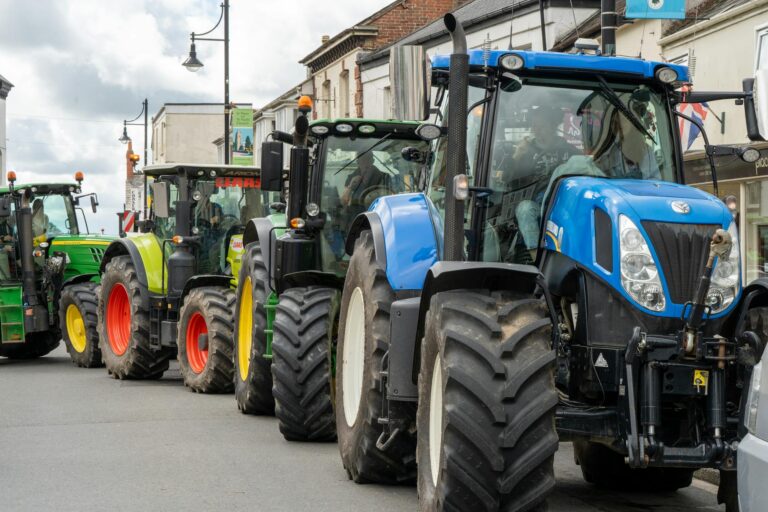
What the tractor lighting guides cover
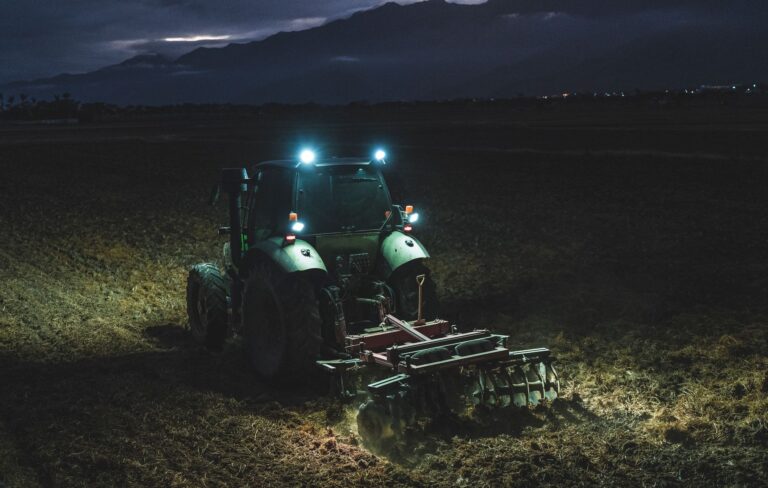
A tractor carries five groups of lamps: headlights for the road, position and indicator lamps for signalling, rear lamps with tail, brake and fog functions, an amber warning beacon, and work lights for the field and yard. The guides in this section define each group, give the UK regulations that apply to it, and compare the LED, halogen and xenon versions on light output, current draw and life. Fitment questions, such as which headlamp fits a John Deere 6000 series or which beacon pole a Fendt cab takes, are answered in the fitment guides.
How to use the guides with the shop
Each guide links to the matching product range, so a reader who has settled on a 12/24V LED beacon with a DIN pole mount can open LED tractor beacons and filter by voltage and mounting. Prices are shown ex VAT and inc VAT, in-stock parts are dispatched within one working day, and UK mainland delivery is free on orders over £75. For advice on a specific machine, the Agri Lighting team in Lincolnshire is on 01522 440522, Monday to Friday.