Ford and Fordson Tractor Lights: Classic and Vintage Fitment
In this guide
- How Ford and Fordson Tractor Lighting Works
- Identifying Your Ford or Fordson Tractor Series
- Fordson Era Lighting (1917 to 1964)
- Ford 1000 Series Headlamps (1965 to 1975)
- Ford 10 Series Headlamps (1981 to 1991)
- Work Lamps for Ford Tractors
- Rear Lamps, Number Plate, and Indicator Bulbs
- Upgrading a Classic Ford or Fordson to LED
- Where to Buy Ford and Fordson-Compatible Lights in the UK
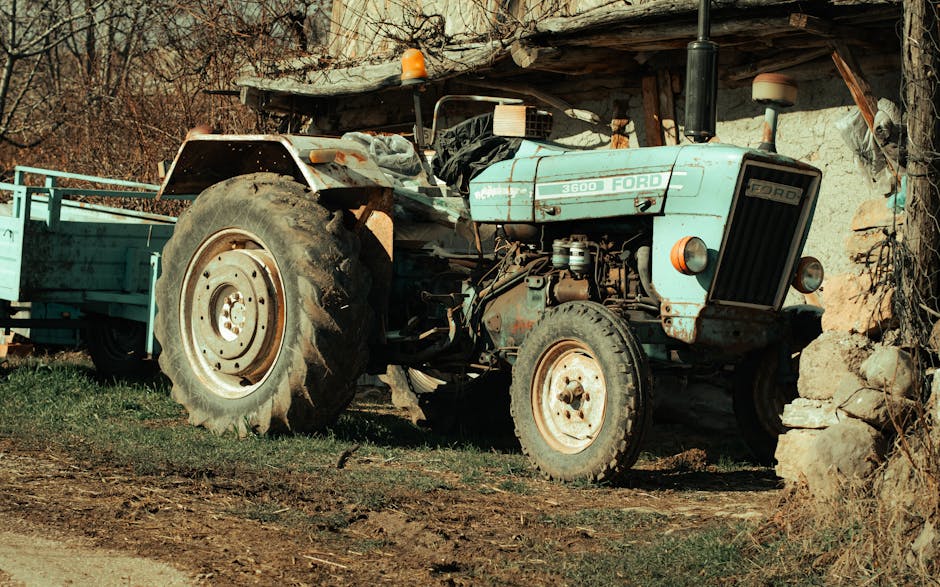
Ford and Fordson tractor lighting covers 74 years of British and American production, from the 1917 Fordson Model F through to the 1991 Ford 8210. A Ford 7610 of the 1980s carries H4 halogen headlamps and a basic rear cluster with separate stop, tail, and indicator bulbs. The fitment, the bulb codes, and the housing dimensions shifted across the Fordson era, the 1000 series, the 600 series, and the 10 series. Buying a replacement bulb or LED upgrade for any Ford or Fordson tractor starts with the model number, the build year, and the original lamp specification. This guide covers the full lineage from Fordson Model F to Ford 8210, the standard bulb codes for each series, the sealed-beam-to-LED conversion path for classic models, and the supply situation for restorers and working owners.
How Ford and Fordson Tractor Lighting Works
Ford and Fordson tractor lighting is the system of headlamps, work lamps, rear clusters, and indicator bulbs fitted to tractors built under the Fordson name (1917 to 1964) and the Ford name (from 1965; Ford bought New Holland in 1986 to form Ford New Holland). The system splits into 4 functional categories on every road-going Ford or Fordson tractor: front headlamps for road and forward visibility, work lamps for fieldwork, rear clusters for tail/stop/indicator/reverse, and side or roof beacons where fitted for slow-moving vehicle warning.
Ford tractor production split across three eras with distinct lighting standards. The Fordson era ran from 1917 to 1964, with the Model F, Model N, Fordson Major (E27N), New Fordson Major (E1A) and Fordson Power Major using 6-volt or 12-volt systems and round headlamps. The Ford 1000 series ran from 1965 to 1975 with the 2000, 3000, 4000, 5000 and 7000 models on a 12-volt system, with the headlamps set into the grille. The Ford 10 series ran from 1981 to 1991 with the 2610, 3610, 4610, 5610, 6610, 7610, 7710 and 8210 models, again on 12-volt, with H4 halogen headlamps. The H4 bulb only arrived in 1971, so the earliest 1000 series tractors cannot have left the factory with H4 lamps.
A Ford or Fordson tractor accepts LED upgrades on most lamp positions. Where the tractor has a round sealed-beam or bulb-type headlamp, a complete E-marked LED unit of the same size is the cleanest swap. The work lamps and rear clusters use universal bulb codes that LED equivalents are made for. Measure the headlamp and check the bulb fitted before ordering, because sizes and housings changed between series.
Identifying Your Ford or Fordson Tractor Series
A Ford or Fordson series identifier appears on the side bonnet badge, the chassis number plate on the right-hand front frame rail, and the data plate inside the operator’s manual sleeve. The series and model year together fix the lighting specification.
| Series | Production years | Common models | Electrical system |
|---|---|---|---|
| Fordson Model F / N | 1917 to 1945 | Model F, Model N | Early electrics, lights often an accessory |
| Fordson Major (E27N) | 1945 to 1952 | E27N Major | 6-volt or 12-volt |
| New Fordson Major (E1A) | 1952 to 1958 | New Major | 6-volt or 12-volt |
| Fordson Power / Super Major | 1958 to 1964 | Power Major, Super Major | 12-volt |
| Fordson Dexta / Super Dexta | 1957 to 1964 | Dexta, Super Dexta | 12-volt |
| Ford 1000 series | 1965 to 1975 | 2000, 3000, 4000, 5000, 7000 | 12-volt |
| Ford 600 series (1975 facelift) | 1975 to 1981 | 2600, 3600, 4600, 5600, 6600, 7600 | 12-volt |
| Ford 10 series | 1981 to 1991 | 2610, 3610, 4610, 5610, 6610, 7610, 7710, 8210 | 12-volt |
| Ford New Holland 40 series | 1991 onward | 5640, 6640, 7740, 7840, 8240, 8340 | 12-volt |
Reading the Model Number
A Ford 1000 series, 600 series, or 10 series model number gives the engine size class. A Ford 4000 is a mid-1960s 55 hp utility; a 4600 is a 1975 facelift of the same class; a 4610 is a 1981 10-series version with the same chassis lineage. A Ford 7610 produces 86 hp; a Ford 8210 produces 116 hp. The chassis plate confirms the exact build year and lighting specification.
Voltage Identification
Many Fordson Majors built before 1952 use a 6-volt system. A New Fordson Major from 1952 to 1958 may be 6-volt or 12-volt depending on year and specification. A Ford 1000 series, 600 series, or 10 series uses 12-volt throughout. Voltage matters because a 12-volt bulb fitted to a 6-volt system gives only a fraction of its rated output (and a 12-volt LED may not light at all) and a 6-volt bulb fitted to a 12-volt system burns out almost immediately. Confirm voltage from the original wiring loom or the battery before ordering replacement bulbs.
Fordson Era Lighting (1917 to 1964)
A Fordson tractor headlamp from 1917 to 1964 is a round lamp mounted in a steel bezel on the front cowling or on the side of the radiator support. The original specification varied by market, model and year, and many tractors used bulb-type lamps rather than sealed beams, so measure the lamp and check what is fitted before ordering.
Fordson Major (E27N) and New Fordson Major (E1A)
A Fordson Major built between 1945 and 1958 carries 2 round headlamps. Depending on market and year these may be bulb-type units or sealed beams. Direct replacements are available through classic tractor parts specialists, and a complete LED unit of the same size can replace either type, at roughly GBP 80 to GBP 150 per lamp.
Fordson Power Major and Super Major
A Fordson Power Major (1958 to 1961) and Super Major (1961 to 1964) run on a 12-volt system. Check the lamp size and type before ordering, as fitments varied. The same direct replacement or LED unit route applies.
Fordson Dexta and Super Dexta
A Fordson Dexta (1957 to 1962) and Super Dexta (1962 to 1964) use smaller round headlamps set into the bonnet front. Measure the lamp before ordering. Replacements and LED units in the smaller sizes are less common than 7-inch but are still stocked through classic tractor parts specialists.
Work Lamps on Fordson Models
A Fordson tractor left the factory with no work lamps as standard. Period accessories included single-stalk work lamps mounted to the front fender or rear cab pillar by the original Ford dealer or by independent specialists. A restored Fordson typically receives 1 to 2 modern LED work lamps on the same fender or cab mounting positions for practical use.
Ford 1000 Series Headlamps (1965 to 1975)
A Ford 1000 series tractor (2000, 3000, 4000, 5000, 7000) carries 2 headlamps set into the front grille. Early tractors used sealed-beam or bulb-type units, because the H4 halogen bulb did not exist until 1971. Later or replacement units may take an H4 bulb, so check the lamp fitted before ordering.
| Model | Years | Engine power |
|---|---|---|
| Ford 2000 | 1965 to 1975 | 32 to 37 hp |
| Ford 3000 | 1965 to 1975 | 39 to 47 hp |
| Ford 4000 | 1965 to 1975 | 55 hp |
| Ford 5000 | 1965 to 1975 | 65 hp |
| Ford 7000 | 1971 to 1975 | 94 hp |
Sealed Beam or Halogen on the 1000 Series
Owners restoring a 1000 series tractor can keep a sealed-beam unit (still available through classic parts suppliers) or fit a halogen unit for serviceability. Check the bezel and mounting first, as grille-mounted units differ between models and years.
Replacement H4 Bulbs and Connectors
Where a Ford headlamp takes an H4 bulb, it uses the standard H4 60/55W bulb on a P43t base. Direct-fit halogen replacements cost GBP 5 to GBP 15 per bulb. Plug-in LED H4 replacements cost GBP 40 to GBP 90 per pair and plug into the original connector, but a plug-in LED bulb in a halogen reflector is generally not type-approved for road use, so treat it as an off-road option.
Ford 10 Series Headlamps (1981 to 1991)
A Ford 10 series tractor (2610, 3610, 4610, 5610, 6610, 7610, 7710, 8210) carries 2 H4 60/55W headlamps in headlight and cowl assemblies at the front of the bonnet. The 10 series was replaced by the Ford New Holland 40 series from 1991.
| Model | Years | Engine power | Headlamp bulb |
|---|---|---|---|
| Ford 2610 | 1981 to 1990 | 36 hp | H4 60/55W |
| Ford 3610 | 1981 to 1990 | 45 hp | H4 60/55W |
| Ford 4610 | 1981 to 1990 | 55 hp | H4 60/55W |
| Ford 5610 | 1981 to 1990 | 64 hp | H4 60/55W |
| Ford 6610 | 1981 to 1990 | 76 hp | H4 60/55W |
| Ford 7610 | 1981 to 1990 | 86 hp | H4 60/55W |
| Ford 7710 | 1981 to 1990 | 96 hp | H4 60/55W |
| Ford 8210 | 1982 to 1991 | 116 hp | H4 60/55W |
10 Series Headlamp Housing
A Ford 10 series headlamp housing is a stamped-steel bezel with an internal H4 reflector unit, a sealing gasket, and a wire spring clip retaining the bulb. Replacement complete housings are available through Ford-New Holland (now CNH Industrial) parts under the original part numbers, and through aftermarket suppliers at lower cost. Common faults include cracked plastic reflectors, perished gasket seals letting in moisture, and corroded bulb sockets.
Cab Pillar Work Lamps on 10 Series
A Ford 10 series tractor with the Q-cab option typically carries 1 or 2 H3 55W stalk-mounted work lamps on the cab roof rear corners. Aftermarket LED replacements at 80mm round produce 1,800 to 3,000 lumens against approximately 1,000 lumens for the H3 halogen, draw 18W instead of 55W, and last 30,000 hours instead of 500 hours.
Work Lamps for Ford Tractors
A Ford tractor work lamp from any era uses 1 of 3 common bulb codes: H3 55W (most common on factory-fit stalk lamps), H4 60/55W (some larger flood units), and miniature bayonet bulbs (smaller utility lamps). Aftermarket LED replacements exist for every original lamp position.
Standard Work Lamp Specifications
A Ford 10 series factory work lamp produces 850 to 1,100 lumens from an H3 55W halogen bulb in a parabolic reflector with a smooth or stippled lens. The factory mounting bracket bolts to the cab roof corner or the front fender stay using an M8 stud. Aftermarket LED replacements in the same 80mm or 100mm round form produce 1,800 to 3,600 lumens, draw 18W to 40W instead of 55W, and last 30,000 hours. The work light beam patterns guide covers flood, spot, and combo optic choices for tractor work lamps.
Adding Extra Work Lamps to a Ford 10 Series
A Ford 10 series tractor can usually take several additional LED work lamps, but check the alternator rating stamped on the unit first. As a guide, a 65 amp alternator at 14 V supplies about 910W, and the standard lighting and electrical load takes a share of that. Six 40W LED work lamps add 240W, so add up the total load before fitting. Wiring requires a 30A relay, an inline 30A fuse, and a switched-feed from the cab. The how to wire work lights to a 12V system guide covers the install procedure.
Rear Lamps, Number Plate, and Indicator Bulbs
A Ford or Fordson rear cluster combines stop, tail, indicator, and (on later models) reverse functions in either a single sealed unit or as separate bulb positions. The bulb codes are universal across the European tractor industry.
| Function | Common bulb code | Wattage | Era |
|---|---|---|---|
| Stop / tail (combined twin filament) | P21/5W (BAY15d) | 21W / 5W | 1965 onwards |
| Tail only (single filament) | R5W (BA15s) | 5W | Fordson and early 1000 series |
| Indicator (amber) | PY21W (BAU15s) | 21W | 1965 onwards |
| Reverse light | P21W (BA15s) | 21W | Some 10 series |
| Number plate | C5W festoon | 5W | 1965 onwards |
Number Plate Lights
A Ford 10 series number plate light sits on the rear linkage cross-member or on a small bracket below the rear cluster. The C5W 5W festoon bulb is standard. LED C5W festoon replacements cost GBP 4 to GBP 8 per pair and run cooler than the halogen original. The licence plate lights guide covers the regulation and replacement detail.
Indicator Hyperflash on LED Bulb Swaps
A plain LED PY21W bulb fitted to a Ford 10 series indicator circuit draws too little current for the original thermal (bi-metallic) flasher, which then flashes slowly or not at all. A modern electronic load-dependent flasher flashes fast (hyperflash) instead. The fix is either an LED bulb with a built-in load resistor, or replacement of the original flasher with an electronic LED-compatible flasher unit at GBP 5 to GBP 15.
Upgrading a Classic Ford or Fordson to LED
A classic Ford or Fordson tractor accepts LED upgrades on every lamp position. The upgrade improves visibility, reduces alternator load, extends service interval from 500 to 1,000 hours to 30,000 hours, and removes the need for routine bulb replacement.
LED 7-Inch Round Headlamp Replacement
A 7-inch round LED headlamp unit fits tractors with a 7-inch round headlamp bezel and replaces the entire original lamp. Check the lamp size on your tractor first, as the grille and cowl mounted headlamps on many later Ford models are not 7-inch round units. Power draw drops from 55W per lamp (halogen) to 25 to 30W per lamp (LED). Choose an E-marked unit for road use. UK retail price runs GBP 80 to GBP 200 per pair.
LED H4 Plug-In Replacement
A plug-in LED H4 bulb retains the original housing on a Ford 1000, 600, or 10 series and replaces only the bulb. The advantage is cost (GBP 40 to GBP 90 per pair) and originality (the original housing stays in place). The trade-off is that the LED chip and heat sink occupy more space than the original H4 bulb, which can interfere with the rubber sealing boot. Confirm clearance behind the headlamp before ordering. A plug-in LED bulb in a halogen headlamp is generally not type-approved for road use, so it suits off-road and yard work only.
Compatibility with Original 6-Volt Wiring
A 6-volt Fordson Major requires a 6-volt LED bulb or a 6-to-12-volt step-up converter wired inline. Most aftermarket LED bulbs are 12-volt or 12 to 24-volt compatible only. A converter adds GBP 15 to GBP 25 to the install cost. Many owners restoring a Fordson take the opportunity to convert the full system to 12-volt at the same time, which standardises every bulb and accessory to current parts availability.
EMC and Original Equipment Risk
A pre-1991 Ford or Fordson uses basic wiring with no electronic control unit. EMC interference from a poor-quality LED bulb cannot affect any digital system because none exists. The risk is limited to radio interference on a fitted in-cab radio, which an R10-approved LED bulb helps prevent. The halogen to LED upgrade guide covers the EMC test marks to look for.
Where to Buy Ford and Fordson-Compatible Lights in the UK
A Ford or Fordson-compatible lamp is available through classic tractor parts specialists, through agricultural lighting suppliers that stock heritage fitment, and through Ford-New Holland dealer networks for the later 10 series. Agri Lighting holds UK stock of 7-inch round LED headlamps, H4 LED bulb upgrades, H3 work lamp replacements, and the universal P21/5W, PY21W, P21W, R5W and C5W festoon bulbs that cover every Ford and Fordson model from the Fordson Major through to the Ford 10 series.
For the full range of fitment options across every major brand, see the tractor light fitment guide. For technology comparison, see the LED vs halogen tractor lights guide. For UK road compliance on a classic tractor returning to road duty, see the tractor lighting regulations UK guide. Browse the full range of tractor headlights and work lights for Ford and Fordson fitment.