Premium Tractor Lighting Setup: Full Upgrade Guide
In this guide
- What a Premium Tractor Lighting Setup Includes
- Front Lighting: LED Headlamps and Driving Lights
- Work Lights: Cab Roof, Fender, and Side
- Roof Light Bars and Long-Range Field Lighting
- Rear and Reversing Lighting
- Beacons and Road-Warning Systems
- Wiring, Switching, and Control
- Total Cost and Where the Premium Spend Pays Back
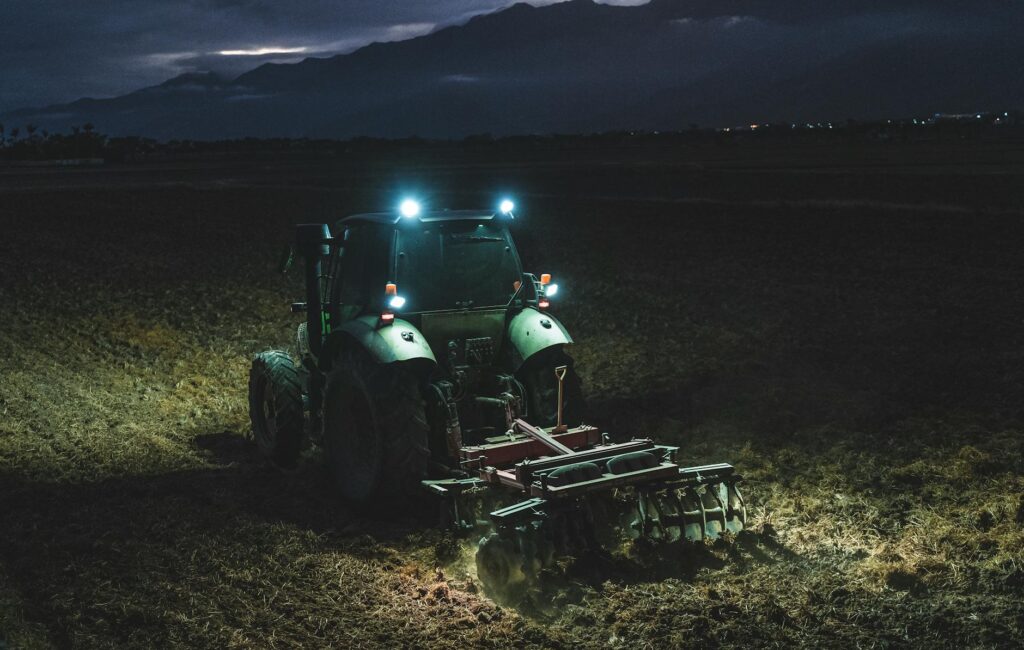
A premium tractor lighting setup combines LED headlamps, high-output work lights, a roof light bar, full rear lighting, and an ECE R65 beacon into a single specification built for long hours of night work. The complete setup costs £1,200 to £3,500 depending on output and brand, replaces every halogen lamp with sealed LED, and turns night fieldwork into daytime-equivalent visibility. This guide specifies each component, the output to target, where to mount it, and where the premium spend pays back.
What a Premium Tractor Lighting Setup Includes
A premium tractor lighting setup includes seven component groups, LED headlamps, cab roof work lights, fender and side work lights, a roof light bar, rear and reversing lights, an ECE R65 beacon, and a relay-based wiring and control system. Each group uses premium-tier components rated for output, sealing, and electromagnetic compatibility.
The premium tier separates from budget and mid-market fitment on five measures. The first is output, with cab roof work lights producing 3,500 to 9,000 lumens each against 1,000 to 2,000 for budget lamps. The second is sealing, with an IP6K9K rating against high-pressure washing rather than IP67. The third is electromagnetic compatibility, with ECE R10 certification that protects GPS and auto-steer from interference. The fourth is vibration rating, with die-cast aluminium housings rated to survive combine and sprayer mounts. The fifth is warranty, with 5-year cover rather than 12 months.
The setup suits arable contractors, large farms, and operators running tractors through harvest, drilling, and silage seasons after dark. For a lower-cost route, the Budget Tractor Lighting Upgrade covers a setup under £200, and the Buyer’s Decision Guide frames the choice between tiers.
Front Lighting: LED Headlamps and Driving Lights
Premium front lighting replaces halogen headlamps with LED modules producing 2,000 to 3,000 lumens per side. The headlamp upgrade gives a whiter, brighter, and longer-reaching dipped and main beam for road travel and headland turning.
LED headlamp modules fit the existing sealed-beam or round insert recess on most tractors. They come in the common round and rectangular sizes used on tractors, including 7 inch round and 90 mm modules, so measure the existing recess and check the fitting before ordering. The premium modules hold a sharp dipped-beam cut-off, which prevents dazzle to oncoming road traffic.
Driving lights add long-range forward projection for road transport and field approach. A pair of premium LED driving lights projects a focused beam to 250 metres or more. The lights mount to the front grille guard or roof and switch separately from the headlamps.
The front setup uses 9 to 33 V multivoltage modules that work on both 12 V and 24 V systems. For the upgrade detail, see LED Headlamp Conversions: How to Upgrade from Halogen and Driving Lights vs Headlights: What Is the Legal Difference.
Work Lights: Cab Roof, Fender, and Side
Premium work lights deliver 3,500 to 9,000 lumens from die-cast LED housings. The work light array is the core of a premium setup and the part that turns night fieldwork into daytime-equivalent visibility.
A premium work light layout uses three positions.
| Position | Lumens each | Beam | Job |
|---|---|---|---|
| Cab roof front | 3,500 to 9,000 | combination | Forward field and implement |
| Cab roof rear | 3,500 to 6,000 | flood | Rear implement and mounted gear |
| Fender and side | 1,500 to 3,500 | flood | Near-field, wheel line, headland |
The cab roof front lights carry the workload. Two to four high-output lamps with combination optics light the field ahead and the implement working width. The cab roof rear lights flood the area behind for mounted implements, ploughs, and balers.
Fender and side lights fill the near-field gaps. These light the wheel line, the headland edge, and the ground beside the tractor for low-speed manoeuvring.
Premium work lights carry IP6K9K sealing, ECE R10 EMC certification, and vibration ratings to 20 g. For output selection and beam pattern, see How Many Lumens Do You Need for Tractor Work Lights and Work Light Beam Patterns: Flood, Spot, and Combo Explained.
Roof Light Bars and Long-Range Field Lighting
A premium roof light bar projects a wide, long-range beam across the full working width. The light bar covers the gap between the spot reach of driving lights and the flood spread of work lights.
A roof-mounted LED light bar between 20 and 50 inches produces 10,000 to 30,000 lumens across its length. The bar uses a combination of spot and flood optics, with spot optics in the centre for distance and flood optics at the ends for width. The result is even coverage of the field ahead to 150 metres and beyond.
The light bar mounts to the cab roof front rail or a dedicated bracket. Mounting height matters, as a higher bar reduces near-field shadow from the implement and the bonnet. Most premium setups place the bar at the front edge of the cab roof.
A roof light bar draws significant current, so it runs through its own relay and fuse. For the road-use position, see Can You Use LED Light Bars on Public Roads in the UK, as a light bar used on the road has restrictions a work light does not.
Rear and Reversing Lighting
Premium rear lighting combines LED work lights, reversing lamps, and a full rear lamp cluster. The rear setup covers both fieldwork visibility and road-legal signalling.
Three rear components complete the setup.
Rear work lights flood the area behind the tractor for mounted implements and night reversing. Two cab-rear flood lamps at 3,500 to 6,000 lumens each cover the working width.
Reversing lamps give dedicated white reverse illumination that switches with the gearbox. A premium reversing lamp adds a reversing alarm for yard safety.
A full LED rear lamp cluster combines tail, brake, indicator, fog, and reflector functions for road use. The cluster keeps the tractor road-legal when travelling between fields and farms.
For the rear lighting detail, see Tractor Tail Lights and Rear Lighting: What the Law Requires and Tractor Reversing Lights: Fitment, Regulations, and Best Options.
Beacons and Road-Warning Systems
A premium setup uses an ECE R65 Class 2 LED beacon or slimline light bar. An amber beacon is a legal requirement for a tractor with a maximum design speed of 25 mph or less on an unrestricted dual carriageway, and good practice whenever the tractor travels on or works near public roads.
A Class 2 LED beacon has two intensity levels: a brighter day setting that stays visible in sunshine on the open road, and a dimmed night setting that avoids dazzling other drivers. The premium beacon offers selectable flash patterns, draws 8 to 14 watts, and carries no moving parts to wear. A slimline LED light bar gives wider visibility than a single beacon for wide-implement work.
The beacon mounts on a flexi DIN pole that bends on contact with barn doors and branches. For the approval classes and legal triggers, see ECE R65 Beacons: What the Regulation Means and When Are Amber Beacons Legally Required on Tractors in the UK.
Wiring, Switching, and Control
Premium wiring uses relays, fused circuits, and a switched control panel. The wiring is the part that turns a collection of lights into a reliable, controllable system.
Each high-current circuit runs through its own relay so the cab switch carries only the trigger current, not the full lamp load. Fuses protect every circuit against short and overload. A labelled switch panel groups the lights by function, front, work, roof bar, rear, and beacon, so the operator controls each group separately.
A premium installation uses sealed Deutsch or DT connectors that resist water and vibration, and a wiring loom sized for the total current draw. Correct wiring prevents the voltage drop, flicker, and EMC interference that undermine cheaper installations.
For the wiring method, see How to Wire Tractor Lights with a Relay: Complete Guide and Fuses and Circuit Protection for Vehicle Lighting. For mounting positions across the whole setup, see Mounting Positions for Tractor Lights.
Total Cost and Where the Premium Spend Pays Back
A full premium tractor lighting setup costs £1,200 to £3,500 depending on output and brand. The spread reflects the number of work lights, the choice of premium versus upper-mid brands, and whether a professional fits the system or the operator does it.
A worked premium specification breaks down as follows.
| Component | Premium spec | Indicative cost |
|---|---|---|
| LED headlamp modules (pair) | 2,000 to 3,000 lm each | £120 to £260 |
| Cab roof work lights (4) | 4,500 lm each | £400 to £900 |
| Fender and side work lights (4) | 2,000 lm each | £160 to £400 |
| Roof light bar | 20,000 lm | £200 to £500 |
| Rear work and reversing lamps | mixed | £120 to £300 |
| ECE R65 Class 2 beacon | Class 2 LED | £40 to £90 |
| Wiring, relays, switches, connectors | full loom | £100 to £300 |
| Total | £1,140 to £2,750 |
Professional fitting adds £300 to £750 on top, which takes a fully fitted premium setup to the upper end of the range.
The premium spend pays back in three ways. The first is work time, as daytime-equivalent visibility extends the working day through harvest and drilling and reduces the risk of missed weather windows. The second is service life, as premium LED lasts 30,000 to 50,000 hours against a few hundred hours for a typical halogen bulb, which removes the bulb-replacement cost and downtime. The third is resale and reliability, as sealed, EMC-certified lights survive the conditions that destroy cheaper lamps and protect GPS and auto-steer from interference.
For the cost picture and the alternative, see How to Upgrade Your Tractor from Halogen to LED Lighting and Budget Tractor Lighting Upgrade: What to Fit for Under GBP 200. For the quality argument behind premium components, see Cheap vs Premium LED Work Lights.
A premium tractor lighting setup turns a tractor into a machine that works the same after dark as it does in daylight. Specify the output for each position, wire it through relays and fuses, choose EMC-certified components, and the setup earns back its cost across every night season the tractor works.
For the components, browse the LED work lamp category and the beacon category.