Ford and Fordson Tractor Lights: Classic and Vintage Fitment
In this guide
- How Ford and Fordson Tractor Lighting Works
- Identifying Your Ford or Fordson Tractor Series
- Fordson Era Lighting (1917 to 1964)
- Ford 1000 Series Headlamps (1965 to 1975)
- Ford 10 Series Headlamps (1981 to 1991)
- Work Lamps for Ford Tractors
- Rear Lamps, Number Plate, and Indicator Bulbs
- Upgrading a Classic Ford or Fordson to LED
- Where to Buy Ford and Fordson-Compatible Lights in the UK
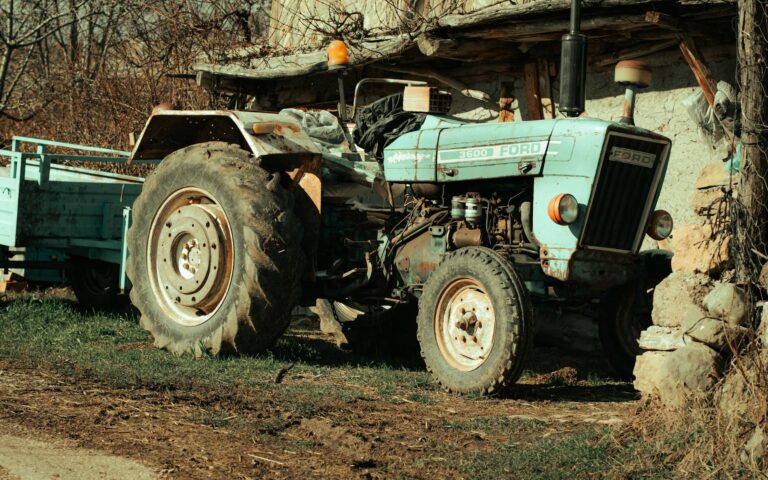
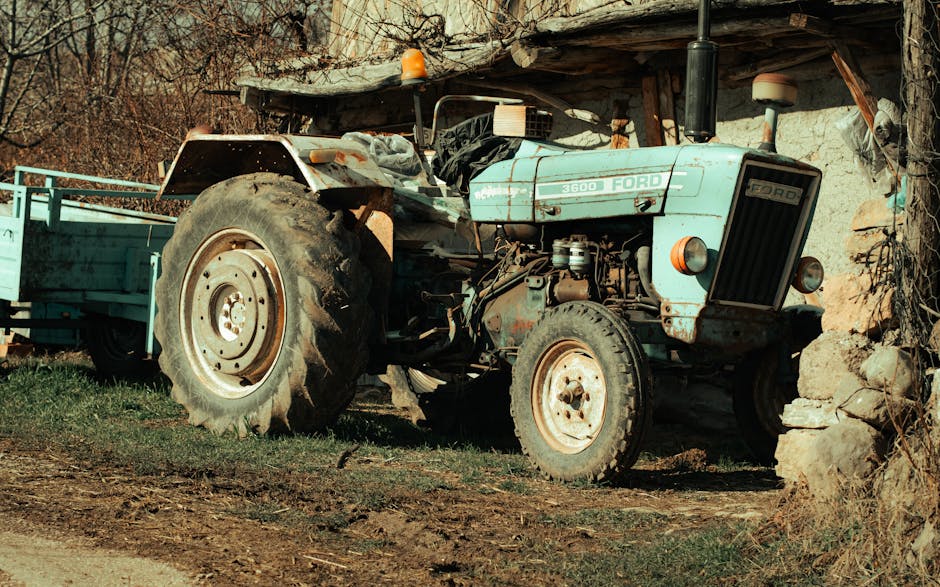
Ford and Fordson tractor lighting covers 74 years of British and American production, from the 1917 Fordson Model F through to the 1991 Ford 8210. The Fordson Major of 1952 carries a pair of 7-inch sealed-beam headlamps. A Ford 7610 of 1985 carries 7-inch H4 halogen lamps, a single H3 work lamp on a fender stalk, and a basic rear cluster with separate stop, tail, and indicator bulbs. The fitment, the bulb codes, and the housing dimensions shifted across the Fordson era, the 1000 series, the 600 series, and the 10 series. Buying a replacement bulb or LED upgrade for any Ford or Fordson tractor starts with the model number, the build year, and the original lamp specification. This guide covers the full lineage from Fordson Model F to Ford 8210, the standard bulb codes for each series, the sealed-beam-to-LED conversion path for classic models, and the supply situation for restorers and working owners.
How Ford and Fordson Tractor Lighting Works
Ford and Fordson tractor lighting is the system of headlamps, work lamps, rear clusters, and indicator bulbs fitted to tractors built under the Fordson name (1917 to 1964) and the Ford name (1965 to 1991, when the brand became Ford-New Holland). The system splits into 4 functional categories on every road-going Ford or Fordson tractor: front headlamps for road and forward visibility, work lamps for fieldwork, rear clusters for tail/stop/indicator/reverse, and side or roof beacons where fitted for slow-moving vehicle warning.
Ford tractor production split across three eras with distinct lighting standards. The Fordson era ran from 1917 to 1964, with the Model F, Model N, Fordson Major (E27N), New Fordson Major (E1A) and Fordson Power Major using 6-volt or 12-volt systems and 7-inch round sealed-beam or pre-focus bulb headlamps. The Ford 1000 series ran from 1965 to 1975 with the 2000, 3000, 4000, 5000, 6000, and 7000 models on a uniform 12-volt system and 7-inch round H4 halogen headlamps. The Ford 10 series ran from 1981 to 1991 with the 2610, 3610, 4610, 5610, 6610, 7610, 7710, 8210, and 8530 models, again on 12-volt with 7-inch H4 round headlamps as standard.
A Ford or Fordson tractor accepts LED upgrades on every lamp position. The 7-inch round sealed-beam housing on the Fordson Major and the 1000 series accepts a direct LED sealed-beam swap. The 7-inch H4 housing on the 1000 series and 10 series accepts either a plug-in LED H4 bulb or a full LED unit replacement. The work lamps and rear clusters use universal bulb codes that LED equivalents are made for. Upgrading a classic Ford to LED is a low-risk, high-impact retrofit because the lighting system uses standard sizes throughout.
Identifying Your Ford or Fordson Tractor Series
A Ford or Fordson series identifier appears on the side bonnet badge, the chassis number plate on the right-hand front frame rail, and the data plate inside the operator’s manual sleeve. The series and model year together fix the lighting specification.
| Series | Production years | Common models | Lighting era |
|---|---|---|---|
| Fordson Model F / N | 1917 to 1945 | Model F, Model N | Pre-war 6-volt sealed beam |
| Fordson Major (E27N) | 1945 to 1952 | E27N Major | 6-volt sealed beam |
| New Fordson Major (E1A) | 1952 to 1958 | New Major | 6-volt or 12-volt sealed beam |
| Fordson Power / Super Major | 1958 to 1964 | Power Major, Super Major | 12-volt sealed beam |
| Fordson Dexta / Super Dexta | 1957 to 1964 | Dexta, Super Dexta | 12-volt sealed beam |
| Ford 1000 series | 1965 to 1975 | 2000, 3000, 4000, 5000, 6000, 7000 | 12-volt 7-inch H4 |
| Ford 600 series (1975 facelift) | 1975 to 1981 | 2600, 3600, 4600, 5600, 6600, 7600 | 12-volt 7-inch H4 |
| Ford 10 series | 1981 to 1991 | 2610, 3610, 4610, 5610, 6610, 7610, 7710, 8210, 8530 | 12-volt 7-inch H4 |
| Ford-New Holland | 1986 onward | 5640, 6640, 7740, 7840, 8240, 8340 | 12-volt 7-inch H4 |
Reading the Model Number
A Ford 1000 series, 600 series, or 10 series model number gives the engine size class. A Ford 4000 is a mid-1960s 55 hp utility; a 4600 is a 1975 facelift of the same class; a 4610 is a 1981 10-series version with the same chassis lineage. A Ford 7610 produces 86 hp; a Ford 8210 produces 116 hp. The chassis plate confirms the exact build year and lighting specification.
Voltage Identification
A Fordson Major built before 1952 uses a 6-volt system as standard. A New Fordson Major from 1952 to 1958 may be 6-volt or 12-volt depending on year and specification. A Ford 1000 series, 600 series, or 10 series uses 12-volt throughout. Voltage matters because a 12-volt LED bulb fitted to a 6-volt system produces approximately one-quarter of its rated output and a 6-volt bulb fitted to a 12-volt system burns out almost immediately. Confirm voltage from the original wiring loom or the battery before ordering replacement bulbs.
Fordson Era Lighting (1917 to 1964)
A Fordson tractor headlamp from 1917 to 1964 uses a 7-inch round sealed-beam unit mounted in a stamped-steel bezel on the front cowling or on the side of the radiator support. The original specification varied by market and model year, but the housing dimensions stayed consistent across the Fordson Major (E27N), the New Fordson Major (E1A), the Power Major, the Super Major, and the Dexta.
Fordson Major (E27N) and New Fordson Major (E1A)
A Fordson Major built between 1945 and 1958 carries 2 7-inch round sealed-beam headlamps with a single twin-filament bulb integral to the lens. The original part was Lucas-supplied with a P36t / BPF bulb base. A direct sealed-beam replacement is widely available at GBP 25 to GBP 50 per lamp. A 7-inch round LED sealed-beam unit fits the same bezel and produces 4,000 to 6,000 lumens compared with the original 700 to 1,000 lumens, with a price range of GBP 80 to GBP 150 per lamp.
Fordson Power Major and Super Major
A Fordson Power Major (1958 to 1961) and Super Major (1961 to 1964) carry the same 7-inch round housing but typically with a 12-volt sealed beam from new. The bulb base and lens dimensions match the earlier Major. The same direct sealed-beam or LED replacement applies.
Fordson Dexta and Super Dexta
A Fordson Dexta (1957 to 1962) and Super Dexta (1962 to 1964) use smaller 5.75-inch round sealed-beam headlamps in a chrome-rimmed bezel set into the bonnet front. Replacement sealed beams in 5.75-inch round size are less common than 7-inch but still stocked through classic tractor parts specialists. LED 5.75-inch round sealed-beam units exist but the choice is narrower than for 7-inch.
Work Lamps on Fordson Models
A Fordson tractor left the factory with no work lamps as standard. Period accessories included single-stalk H3 halogen lamps mounted to the front fender or rear cab pillar by the original Ford dealer or by independent specialists. A restored Fordson typically receives 1 to 2 modern LED work lamps on the same fender or cab mounting positions for practical use.
Ford 1000 Series Headlamps (1965 to 1975)
A Ford 1000 series tractor (2000, 3000, 4000, 5000, 6000, 7000) carries 2 7-inch round headlamps mounted in pressed-steel housings on the bonnet face. The standard fitment from 1965 was an H4 halogen bulb in a removable reflector unit; some early production retained sealed-beam units until approximately 1968.
| Model | Years | Engine power | Headlamp bulb |
|---|---|---|---|
| Ford 2000 | 1965 to 1975 | 32 to 37 hp | H4 60/55W |
| Ford 3000 | 1965 to 1975 | 39 to 47 hp | H4 60/55W |
| Ford 4000 | 1965 to 1975 | 55 hp | H4 60/55W |
| Ford 5000 | 1965 to 1975 | 65 hp | H4 60/55W |
| Ford 6000 | 1965 to 1975 | 75 hp | H4 60/55W |
| Ford 7000 | 1971 to 1975 | 94 hp | H4 60/55W |
Sealed Beam to H4 on Early 1000 Series
A 1965 to 1967 Ford 1000 series tractor sometimes left the factory with a 7-inch sealed-beam unit instead of the H4 reflector. Owners restoring an early example can keep the original sealed beam (still available through classic parts suppliers) or upgrade to the later H4 housing for serviceability. The bezel and mounting holes are identical, so the swap is bolt-on.
Replacement H4 Bulbs and Connectors
A Ford 1000 series headlamp uses the standard H4 60/55W bulb with a 3-pin P43t connector. Direct-fit halogen replacements cost GBP 5 to GBP 15 per bulb. Plug-in LED H4 replacements cost GBP 40 to GBP 90 per pair and produce 4,000 to 6,000 lumens per pair, against approximately 1,800 lumens for the original halogen pair. The original 3-pin connector accepts LED units without modification.
Ford 10 Series Headlamps (1981 to 1991)
A Ford 10 series tractor (2610, 3610, 4610, 5610, 6610, 7610, 7710, 8210, 8530) carries 2 7-inch round H4 60/55W headlamps in the same housing format as the 1000 series and 600 series before it. Ford maintained the 7-inch round H4 standard across 26 years of production from 1965 through to the Ford-New Holland transition in 1986 and beyond.
| Model | Years | Engine power | Headlamp bulb |
|---|---|---|---|
| Ford 2610 | 1981 to 1990 | 36 hp | H4 60/55W |
| Ford 3610 | 1981 to 1990 | 45 hp | H4 60/55W |
| Ford 4610 | 1981 to 1990 | 55 hp | H4 60/55W |
| Ford 5610 | 1981 to 1990 | 64 hp | H4 60/55W |
| Ford 6610 | 1981 to 1990 | 76 hp | H4 60/55W |
| Ford 7610 | 1981 to 1990 | 86 hp | H4 60/55W |
| Ford 7710 | 1981 to 1990 | 96 hp | H4 60/55W |
| Ford 8210 | 1982 to 1991 | 116 hp | H4 60/55W |
| Ford 8530 | 1988 to 1991 | 130 hp | H4 60/55W |
10 Series Headlamp Housing
A Ford 10 series headlamp housing is a stamped-steel bezel with an internal H4 reflector unit, a sealing gasket, and a wire spring clip retaining the bulb. Replacement complete housings are available through Ford-New Holland (now CNH Industrial) parts under the original part numbers, and through aftermarket suppliers at lower cost. Common faults include cracked plastic reflectors, perished gasket seals letting in moisture, and corroded bulb sockets.
Cab Pillar Work Lamps on 10 Series
A Ford 10 series tractor with the Q-cab option carries 1 or 2 H3 55W stalk-mounted work lamps on the cab roof rear corners. The factory part was a Hella-supplied 80mm round halogen lamp. Aftermarket LED replacements at 80mm round produce 1,800 to 3,000 lumens against approximately 1,000 lumens for the H3 halogen, draw 18W instead of 55W, and last 30,000 hours instead of 500 hours.
Work Lamps for Ford Tractors
A Ford tractor work lamp from any era uses 1 of 3 common bulb codes: H3 55W (most common on factory-fit stalk lamps), H4 60/55W (some larger flood units), and miniature bayonet bulbs (smaller utility lamps). Aftermarket LED replacements exist for every original lamp position.
Standard Work Lamp Specifications
A Ford 10 series factory work lamp produces 850 to 1,100 lumens from an H3 55W halogen bulb in a parabolic reflector with a smooth or stippled lens. The factory mounting bracket bolts to the cab roof corner or the front fender stay using an M8 stud. Aftermarket LED replacements in the same 80mm or 100mm round form produce 1,800 to 3,600 lumens, draw 18W to 40W instead of 55W, and last 30,000 hours. The work light beam patterns guide covers flood, spot, and combo optic choices for tractor work lamps.
Adding Extra Work Lamps to a Ford 10 Series
A Ford 10 series tractor accepts up to 6 additional aftermarket work lamps without alternator uprating. The factory 12-volt alternator on a 6610, 7610, 7710 or 8210 produces approximately 65 amps (910W total). The factory baseline lighting load is 200 to 300W including headlamps, instrument lights, and indicators. Six 40W LED work lamps add 240W, leaving headroom for the starter and accessories. Wiring requires a 30A relay, an inline 30A fuse, and a switched-feed from the cab. The how to wire work lights to a 12V system guide covers the install procedure.
Rear Lamps, Number Plate, and Indicator Bulbs
A Ford or Fordson rear cluster combines stop, tail, indicator, and (on later models) reverse functions in either a single sealed unit or as separate bulb positions. The bulb codes are universal across the European tractor industry.
| Function | Common bulb code | Wattage | Era |
|---|---|---|---|
| Stop / tail (combined twin filament) | P21/5W (BAY15d) | 21W / 5W | 1965 onwards |
| Tail only (single filament) | R5W (BA15s) | 5W | Fordson and early 1000 series |
| Indicator (amber) | PY21W (BAU15s) | 21W | 1965 onwards |
| Reverse light | P21W (BA15s) | 21W | Some 10 series |
| Number plate | C5W festoon | 5W | 1965 onwards |
Number Plate Lights
A Ford 10 series number plate light sits on the rear linkage cross-member or on a small bracket below the rear cluster. The C5W 5W festoon bulb is standard. LED C5W festoon replacements cost GBP 4 to GBP 8 per pair and run cooler than the halogen original. The licence plate lights guide covers the regulation and replacement detail.
Indicator Hyperflash on LED Bulb Swaps
A plain LED PY21W bulb fitted to a Ford 10 series indicator circuit triggers a hyperflash (rapid blink) on most tractors because the LED draws too little current to satisfy the original bi-metallic flasher relay. The fix is either a CAN-bus compatible LED bulb with built-in load resistor, or replacement of the original flasher relay with an electronic LED-compatible flasher unit at GBP 5 to GBP 15.
Upgrading a Classic Ford or Fordson to LED
A classic Ford or Fordson tractor accepts LED upgrades on every lamp position. The upgrade improves visibility, reduces alternator load, extends service interval from 500 to 1,000 hours to 30,000 hours, and removes the need for routine bulb replacement.
LED 7-Inch Round Headlamp Replacement
A 7-inch round LED headlamp unit fits the Fordson Major, New Fordson Major, Power Major, Super Major, every Ford 1000 series, every 600 series, every 10 series, and the early Ford-New Holland 40 series. The unit replaces the entire original housing. Output rises from 700 to 1,800 lumens (original sealed beam or H4 halogen) to 4,000 to 6,000 lumens (LED). Power draw drops from 55W per lamp (halogen) to 25 to 30W per lamp (LED). UK retail price runs GBP 80 to GBP 200 per pair.
LED H4 Plug-In Replacement
A plug-in LED H4 bulb retains the original housing on a Ford 1000, 600, or 10 series and replaces only the bulb. The advantage is cost (GBP 40 to GBP 90 per pair) and originality (the original housing stays in place). The trade-off is that the LED chip and heat sink occupy more space than the original H4 bulb, which can interfere with the rubber sealing boot. Confirm clearance behind the headlamp before ordering.
Compatibility with Original 6-Volt Wiring
A 6-volt Fordson Major requires a 6-volt LED bulb or a 6-to-12-volt step-up converter wired inline. Most aftermarket LED bulbs are 12-volt or 12 to 24-volt compatible only. A converter adds GBP 15 to GBP 25 to the install cost. Many owners restoring a Fordson take the opportunity to convert the full system to 12-volt at the same time, which standardises every bulb and accessory to current parts availability.
EMC and Original Equipment Risk
A pre-1991 Ford or Fordson uses analogue ignition and basic wiring with no electronic control unit. EMC interference from a poor-quality LED bulb cannot affect any digital system because none exists. The risk is limited to radio interference on a fitted in-cab radio, which a R10-approved LED bulb prevents. The halogen to LED upgrade guide covers the EMC test marks to look for.
Where to Buy Ford and Fordson-Compatible Lights in the UK
A Ford or Fordson-compatible lamp is available through classic tractor parts specialists, through agricultural lighting suppliers that stock heritage fitment, and through Ford-New Holland dealer networks for the later 10 series. Agri Lighting holds UK stock of 7-inch round LED headlamps, H4 LED bulb upgrades, H3 work lamp replacements, and the universal P21/5W, PY21W, P21W, R5W and C5W festoon bulbs that cover every Ford and Fordson model from the Fordson Major through to the Ford 8530. Same-day dispatch applies to orders placed before 3pm.
For the full range of fitment options across every major brand, see the tractor light fitment guide. For technology comparison, see the LED vs halogen tractor lights guide. For UK road compliance on a classic tractor returning to road duty, see the tractor lighting regulations UK guide. Browse the full range of tractor headlights and work lights for Ford and Fordson fitment.
_Internal links to articles not yet published:_
- /headlamps/sealed-beam-headlight/ (planned Cluster 7.4)
- /shop/tractor-headlights/ (product category)
- /shop/work-lights/ (product category)