Work Light Brackets and Accessories: Mounts, Guards, and Wiring Kits
In this guide
A work light bracket is the mechanical fitting that holds a work lamp in position on a tractor, plant machine, truck, or trailer. A work light accessory covers everything else needed for a complete installation: stone guards, wiring kits, relays, switches, fuses, connectors, and bullet plugs. The bracket choice determines whether the lamp can be aimed correctly, withstands vibration, and survives pressure washing. The accessory choice determines whether the wiring stays watertight, the switching works without dashboard wear, and the lamp can be replaced quickly when it fails. This guide covers the main bracket types (single-bolt swivel, 2-bolt flat, tube clamp, magnetic, roll-bar), the protective accessories (stone guards, lens covers, dust caps), the wiring components (looms, relays, switches, fuses, connectors), and the complete installation parts list for a typical tractor or HGV work light fitment.
Work Light Bracket Types
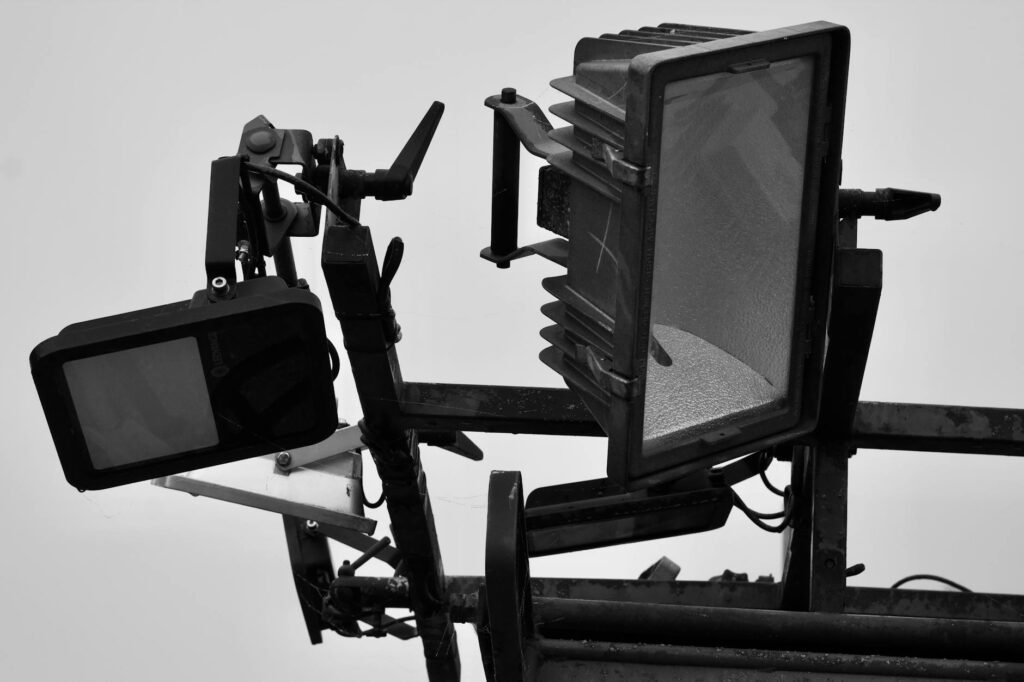
A work light bracket is sized and styled to match the lamp body and the vehicle mounting point. The main bracket types are single-bolt swivel, 2-bolt flat mount, tube clamp, magnetic base, and roll-bar mount.
| Bracket type | Lamp shape suited | Mounting point | Adjustability |
|---|---|---|---|
| Single-bolt swivel | Round and square | Flat plate or tube with bolt | Up-down rotation around bolt |
| 2-bolt flat mount | Square and rectangular | Flat steel plate | Fixed; orientation set by holes |
| Tube clamp | Round | Bar, mast, or roll-bar | Full rotation, up-down tilt |
| Magnetic base | Round 4-inch | Any flat steel surface | Easy reposition |
| Roll-bar clamp | Round 4 to 7 inch | Tractor or ATV roll-bar | Full rotation |
| Pillar mount | Round and square | A-pillar or cab corner | Limited; depends on bracket |
| Pedestal mount | Round and square | Fixed elevated point | Up-down tilt |
Single-Bolt Swivel Bracket
A single-bolt swivel bracket uses one M8 or M10 bolt through the bracket and into a captive nut or threaded hole on the lamp housing. The lamp rotates around the bolt axis for up-down aiming. The bolt is tightened to lock the lamp in position. This is the most common factory bracket for round 4-inch and 5-inch work lamps.
A typical specification includes a stainless steel bracket arm, a steel or zinc-plated bolt, and either a captive nylon nut or a serrated washer to resist loosening under vibration. The bracket carries the full lamp weight at the bolt, so the bolt thread engagement matters. Sub-standard short bolts work loose under field vibration within months.
2-Bolt Flat Mount
A 2-bolt flat mount uses 2 bolts through the lamp body or a separate base plate into a flat steel mounting surface. The fitment is rigid and not adjustable after fitting. This is the standard bracket for square LED work lamps fitted to cab roof brackets, telehandler booms, and HGV cab rails.
A 2-bolt flat mount needs a flat steel mounting surface 100 to 150mm wide. The hole spacing matches the lamp body design (typically 60mm to 120mm centres). Fitting to a curved roof or a non-flat surface requires a separate flat adapter plate welded or bolted to the mounting point.
Tube Clamp Mount
A tube clamp mount fits a round work lamp to a steel tube of a specified diameter (typically 25mm, 30mm, 40mm, or 50mm). The clamp uses 2 half-shells held together by 2 bolts that pinch the tube. The lamp arm attaches to the upper half-shell.
A tube clamp suits roll-bars, beacon poles, exhaust stack guards, and bull bars. The fitment is fully adjustable: the clamp slides along the tube, rotates around the tube, and the lamp itself rotates and tilts on its own swivel bracket. Disadvantage: the tube finish (paint or powder coat) marks under the clamp pressure.
Magnetic Base
A magnetic base bracket uses 1 or 2 strong neodymium magnets to attach the lamp to any flat steel surface. The base typically holds a round 4-inch lamp at 27W to 40W. Higher-wattage lamps overload the magnetic grip in vibration and walk across the surface.
A magnetic base suits temporary lighting on a hire tractor or rented truck, contractors moving between vehicles, and inspection work where the lamp moves around the vehicle for different views. The base does not suit permanent installation on a working tractor because the magnet rotates the lamp out of position over time.
Roll-Bar Clamp
A roll-bar clamp is a heavy-duty tube clamp specifically sized for ATV, UTV, Land Rover, and ROPS roll-bar tube diameters (typically 50mm to 75mm). The clamp includes a flat plate for mounting 1 or 2 work lamps. This is the standard fitment for Polaris Ranger, John Deere Gator, Honda Pioneer, and similar utility vehicles. See ATV and quad bike work lights for the full ATV fitment overview.
Pillar and Pedestal Mounts
A pillar mount fits a work lamp to the A-pillar or B-pillar of a tractor or truck cab. The bracket bolts to existing pillar fixings (mirror mount holes, sun visor brackets) or to specifically welded pillar plates. The lamp position is high and forward, suiting front grille illumination from a high angle.
A pedestal mount is an elevated bracket that places the lamp above the cab roof line. The pedestal is typically a 200 to 400mm vertical post welded or bolted to a flat plate. The lamp position is the highest practical point on the vehicle, suiting long-range visibility on combine harvesters and large sprayers.
Cab Roof Mounting Considerations
A cab roof work lamp mount uses the manufacturer’s pre-fitted DIN-style bolts or threaded inserts. A John Deere R series cab includes 8 work lamp mounting points around the cab roof. A New Holland T6 includes 6 cab roof points. A Massey Ferguson 5700 includes 4 to 6 cab roof points depending on trim.
For retrofit installations on tractors without pre-fitted mounting points, the installer adds a bolted bracket through the cab roof using sealed roof penetrations. The seal must be intact to prevent water ingress.
Stone Guards and Lens Covers
A stone guard is a protective steel mesh or polycarbonate cover that protects the work lamp lens from impact damage. The guard sits in front of the lens, typically 10 to 30mm proud, and clips or bolts to the lamp housing. Common materials are stainless steel mesh, polycarbonate shield, and high-density polyethylene (HDPE) cover.
| Guard type | Protection level | Lens visibility loss |
|---|---|---|
| Stainless steel mesh | High (resists 100kg point impact) | 5 to 10% light blockage |
| Polycarbonate shield | Moderate (clear, impact-resistant) | Negligible |
| HDPE cover | High (resists crushing) | 100% (cover removed for use) |
| Wire mesh grille | Moderate | 5 to 8% blockage |
When to Fit a Stone Guard
A stone guard fits work lamps in high-impact environments: forestry equipment, mining plant, off-road racing vehicles, and certain heavy construction roles. For typical UK agricultural use, stone guards are optional rather than essential because field stones do not regularly reach work lamp positions on a tractor cab roof.
For front grille lamps (closer to ground level, exposed to road debris and field stones thrown by front-mounted implements), stone guards are valuable. For combine harvester cab roof lamps facing forwards over the header, stone guards protect against thrown stones during harvest.
Lens Covers for Storage and Transport
A lens cover is a removable protective hood fitted when the vehicle is parked or in transit. The cover keeps dust, debris, and bird droppings off the lens. Made from HDPE or canvas, the cover snaps or velcros over the lamp face.
A lens cover suits high-value lamps on premium tractors and seasonal-use machines (combine harvesters parked for 9 months a year). For daily-use tractors, the daily cleaning routine usually keeps lenses adequately clear without covers.
Wiring Kits and Looms
A work light wiring kit contains the cables, connectors, fuses, relay, and switch needed for a complete electrical installation. A pre-made kit reduces installation time from 4 hours (sourcing components and cutting wire to length) to 30 minutes (laying the loom and connecting the ends).
Standard Wiring Kit Contents
A standard single-lamp wiring kit includes:
- 4 to 6 metres of 2-core cable (1.5mm² or 2.5mm²)
- 1 x 5-pin automotive relay (30, 85, 86, 87, 87a)
- 1 x in-line blade fuse holder with 15A or 20A fuse
- 1 x dashboard rocker switch with illumination
- 4 x crimp ring or fork terminals
- 4 x heat-shrink butt connectors
- 1 x Deutsch DT 2-pin connector for the lamp end
- 1 x earth eyelet for chassis bonding
A 2-lamp kit includes a Y-splitter cable and extra Deutsch connectors. A 4-lamp kit adds further splitter cables and may upgrade the main supply cable to 4mm² to handle the higher current.
Cable Cross-Section Sizing
A work light wiring cable cross-section sizes to carry the lamp current without significant voltage drop. The general rule is:
| Lamp current draw | Recommended cable cross-section | Maximum length |
|---|---|---|
| Up to 5A | 1.5mm² | 5 metres |
| 5 to 10A | 2.5mm² | 5 metres |
| 10 to 15A | 4mm² | 5 metres |
| 15 to 25A | 6mm² | 5 metres |
| 25 to 40A | 10mm² | 5 metres |
For longer cable runs, step up one cross-section size. A 6m run of 10A current uses 4mm² cable; a 10m run of the same current uses 6mm² cable. The how to wire work lights to a 12V system with a relay guide covers the full wiring schematic and cable sizing rules.
Relay Function and Placement
A 5-pin relay separates the high-current lamp supply from the low-current switching circuit. The dashboard switch carries only the relay coil current (approximately 100mA), which extends the switch lifespan and removes the need to route heavy cable through the dashboard.
The relay should mount close to the lamps (typically on a chassis bracket near the front of the vehicle) so the high-current cable run from battery to lamp is as short as possible. The low-current switching cable runs from the dashboard back to the relay coil.
Fuse Sizing and Type
A work light fuse sizes at approximately 125% of the continuous current draw. A 40W lamp at 12V draws 3.3A and uses a 5A fuse. Two 40W lamps in parallel draw 6.6A and use a 10A fuse. Four 40W lamps draw 13.3A and use a 15A or 20A fuse.
Blade fuses (standard ATO or mini ATO) are the modern automotive standard. The fuse holder should be in-line on the supply cable, near the battery or fuse box. Glass or ceramic fuses are obsolete and should not be used in new installations.
Connectors and Plugs
A work light connector is the waterproof plug that joins the lamp’s flying lead to the vehicle wiring. The dominant connector standard in agricultural and HGV lighting is the Deutsch DT series (DT2, DT3, DT4 for 2, 3, or 4 pins). Deutsch DT connectors offer IP67 sealing, positive locking, and a removable pin format that allows repair without re-crimping the entire harness.
Deutsch DT Connector Specifications
A Deutsch DT2 connector handles 2 conductors (positive and earth) for basic work light wiring. A DT3 connector handles 3 conductors (positive, earth, and switched signal) for lamps with deliberate dimming or switched modes. The connector body is grey for the receptacle and grey for the plug; pin retention is by orange wedge inserts.
Deutsch connectors crimp onto 0.5mm² to 4mm² cable using a specific 4-jaw crimp tool. Hand-crimping with pliers does not produce a reliable connection. The crimp tool costs approximately GBP 80 to GBP 200, which justifies buying or hiring for any meaningful work light installation.
Bullet Connectors and Spade Terminals
A bullet connector or spade terminal is a cheaper alternative to Deutsch connectors. The terminal crimps onto the cable, the bullets push together (or the spades slide onto each other), and a heat-shrink sleeve covers the joint. The cost is approximately one-quarter that of Deutsch connectors.
A bullet or spade connection is acceptable for low-current accessory wiring, but the seal quality is poor. For exposed positions on a tractor (cab roof, front grille), the Deutsch standard is the right choice. For inside the cab (under the dashboard, behind trim), bullet or spade connections are adequate.
Switches and Switch Panels
A work light switch is the dashboard control that activates the relay. Common types are illuminated rocker, illuminated toggle, push-button, and CAN-bus integrated switch panel.
| Switch type | Typical price (per switch) | Mounting | Suitable use |
|---|---|---|---|
| Illuminated rocker | GBP 5 to GBP 25 | Panel cut-out 21x37mm | Tractor dashboard standard |
| Illuminated toggle | GBP 8 to GBP 30 | Panel cut-out 12mm | Plant machinery, classic tractor |
| Push-button momentary | GBP 6 to GBP 20 | Panel cut-out 16 to 22mm | Forklift, ATV, custom build |
| Multi-switch panel | GBP 30 to GBP 150 | Dashboard or A-pillar | Multi-lamp setups |
| CAN-bus integrated | OEM cost | Factory dashboard slot | Modern tractor OEM fit |
Rocker Switch Standard
A 12V illuminated rocker switch is the standard control for retrofit work lamps. The switch carries the relay coil current only (approximately 100mA at 12V), which means low-spec switches at GBP 5 to GBP 10 each are reliable for the role. The illuminated rocker includes a small bulb or LED that lights when the switch is on.
A rocker switch panel cut-out is 21mm x 37mm in modern automotive standard. The switch clips into the panel from the front. Wiring is on 4 spade terminals (live, switched live, earth, illumination).
Switch Panel for Multiple Lamps
A multi-switch panel groups 4 to 8 individual switches in a single panel. Each switch controls a separate work lamp circuit or a separate lamp pair. The panel mounts on the A-pillar, the dashboard, or an overhead cab console.
For a tractor with separate front, side, rear, and cab work lamp circuits, a 6-switch panel allows the operator to control each circuit independently from a single hand position.
Complete Installation Parts List
A complete work light installation parts list covers a typical 4-lamp retrofit on a utility tractor.
| Item | Quantity | Purpose |
|---|---|---|
| LED work lamps | 4 | Light output |
| Single-bolt swivel brackets | 4 | Lamp mounting |
| 4mm² 2-core cable | 6 metres | Main supply run |
| 1.5mm² 2-core cable | 4 metres | Individual lamp runs |
| 5-pin automotive relay | 1 | High-current switching |
| In-line blade fuse holder | 1 | Circuit protection |
| 15A blade fuse | 2 (one spare) | Circuit protection |
| Illuminated rocker switch | 1 | Driver control |
| Deutsch DT2 connector kits | 4 | Lamp-to-loom connection |
| Y-splitter cable | 2 | Splitting the supply |
| Crimp terminals (assorted) | 1 pack | Cable termination |
| Heat-shrink tubing | 1 pack | Joint sealing |
| Cable ties (4 inch and 8 inch) | 2 packs | Loom routing |
| Self-amalgamating tape | 1 roll | Outdoor joint protection |
| Loom protection sleeve | 4 metres | Abrasion protection |
The total parts cost for a quality 4-lamp installation sits between GBP 200 (budget LED lamps and standard wiring) and GBP 800 (premium LED lamps and full Deutsch wiring). The installation time for a competent installer is approximately 3 to 5 hours.
Where to Buy in the UK
Work light brackets and accessories are available through agricultural lighting specialists, plant parts suppliers, and commercial vehicle parts channels. Agri Lighting holds UK stock of single-bolt swivel brackets, 2-bolt flat mounts, tube clamps, magnetic bases, stone guards, Deutsch DT connectors, wiring kits, relays, switches, and fuses to suit LED work lamps in the 4-inch to 7-inch round and 4×4 to 5×5 square ranges. Same-day dispatch applies to orders placed before 3pm.
For the wider work light decision process, see the work light buyer’s checklist, the LED work lights overview, and the work light wattage guide. For the wiring schematic detail, see how to wire work lights to a 12V system with a relay and how to mount work lights. For voltage-specific selection, see 12V LED work lights and 24V work lights. Browse the full range of LED work lights and lighting accessories for current stock.