LED Work Lights: How to Choose the Right One for Your Application
In this guide
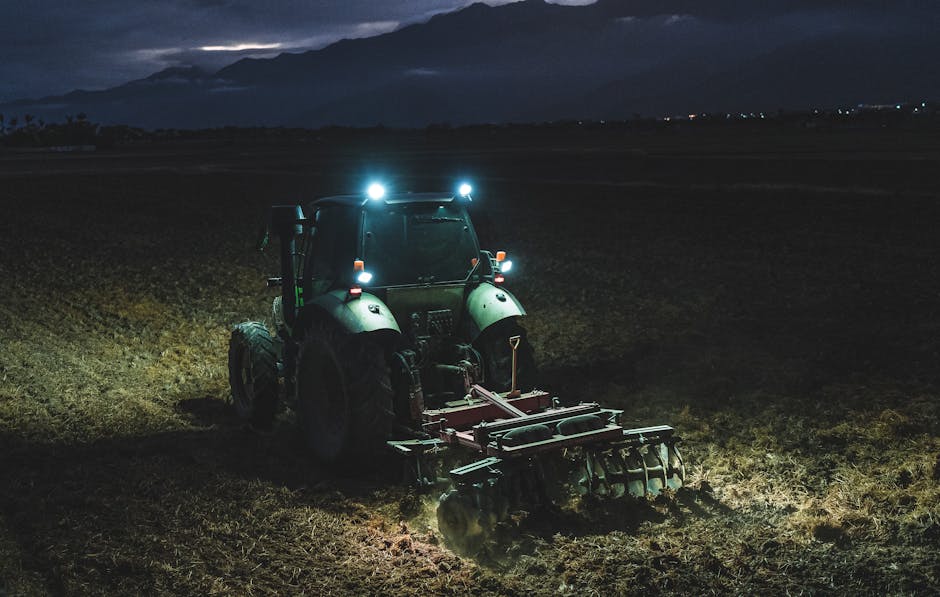
An LED work light is a solid-state lamp designed to illuminate the working area around a vehicle or machine, using light-emitting diodes rather than a filament or gas discharge tube. On farms across the UK, LED work lights have replaced halogen and xenon units on tractors, telehandlers, combines, and trailers because they produce more light per watt, last longer, and resist the vibration that destroys filament bulbs within a season. Choosing the right LED work light means matching lumen output, beam pattern, ingress protection, EMC rating, voltage, and mounting position to the job at hand. This guide covers each of those criteria so you can select the right LED work lights for your machines and your budget.
How LED Work Lights Compare to Halogen and Xenon
An LED work light outperforms halogen and xenon alternatives on efficiency, lifespan, and durability. The differences are measurable and significant.
A halogen work light draws 55W to 70W to produce 800 to 1,500 lumens. Its tungsten filament is fragile and lasts 500 to 1,000 hours under ideal conditions. On a tractor bouncing across ploughed ground, that lifespan drops considerably. Halogen lamps also generate substantial heat, with the bulb surface reaching 300 degrees Celsius or more during operation.
A xenon (HID) work light produces 2,500 to 3,500 lumens and draws roughly 35W, making it more efficient than halogen. However, xenon lamps take 10 to 30 seconds to reach full brightness after switching on, and the ballast unit adds cost, weight, and another potential failure point.
An LED work light producing 3,000 lumens draws 18W to 30W, reaches full brightness instantly, and lasts 30,000 to 50,000 hours. LED work lights have no filament or gas tube to break. The diodes are mounted on a solid circuit board, making them highly resistant to the vibration and shock that farm machinery generates. The colour temperature of most LED work lights falls between 5,000K and 6,500K, producing a daylight-white output that improves contrast and reduces eye strain during long shifts.
Understanding Lumen Output
Lumen output measures the total visible light an LED work light produces. A higher lumen figure means more light, but the number alone does not tell you how well a lamp performs in practice. Two LED work lights rated at 3,000 lumens can deliver very different results depending on the quality of the LEDs, the optical design, and the beam pattern.
Raw lumens (sometimes called “emitter lumens”) represent the theoretical maximum output of the LEDs before losses from the lens, reflector, and housing. Effective lumens (sometimes called “out-the-front lumens”) measure what actually leaves the lamp. The difference between these figures can be 15% to 30%. When comparing LED work lights, look for the effective lumen figure where it is stated.
As a practical guide for agricultural use:
- 800 to 1,500 lumens: suitable for close-range tasks such as coupling a trailer, checking livestock, or illuminating a small work area at short distance.
- 1,500 to 3,000 lumens: suitable for general-purpose use including loader work, yard tasks, and medium-range field illumination.
- 3,000 to 6,000+ lumens: suitable for wide-area fieldwork, harvesting at night, and situations where the LED work light needs to cover a large area or throw light over a significant distance.
For reference, a single 55W halogen work light produces around 1,000 effective lumens. A pair of 3,000-lumen LED work lights produces six times that output while drawing roughly the same total power.
Beam Patterns Explained
The beam pattern of an LED work light determines how light spreads across the work area. Selecting the wrong beam pattern wastes output: a narrow spot beam pointed at a loading area leaves the sides in darkness, while a wide flood beam aimed down a track dissipates before reaching useful distance.
Agricultural LED work lights are available in four main beam patterns.
Flood Beam
A flood beam spreads light across a wide angle, typically 40 to 90 degrees. This pattern covers a broad area at short to medium range. Flood beam LED work lights suit loader buckets, yard lighting, and any task where the operator needs to see a wide area close to the machine. The trade-off is reduced throw distance: because the light spreads widely, intensity drops off faster with distance.
Spot Beam
A spot beam concentrates light into a narrow cone, typically 10 to 30 degrees. This pattern projects light further than a flood beam of the same lumen output because the energy is focused into a smaller area. Spot beam LED work lights suit forward illumination on roads, long-range field lighting, and tasks where distance matters more than width.
Combo Beam
A combo beam combines a central spot with a peripheral flood in a single LED work light. The spot element provides forward throw while the flood element fills the near-field and sides. Combo beams offer versatility for operators who need one lamp to cover multiple scenarios. For more detail on how these patterns compare, see flood vs spot beam.
Trapezoid Beam
A trapezoid beam produces a wide, even spread of light with defined vertical edges and a sharp horizontal cut-off. This pattern is engineered for ground illumination around machinery, spreading light in a rectangular footprint rather than a circular one. Trapezoid beam LED work lights are popular on sprayers, combines, and large tractors where even light distribution across a wide working width matters.
Beam Pattern Comparison Table
| Beam Pattern | Angle | Throw Distance | Width of Coverage | Best Agricultural Use |
|---|---|---|---|---|
| Flood | 40 to 90 degrees | Short to medium (up to 20m effective) | Wide | Loader work, yard lighting, close-range tasks |
| Spot | 10 to 30 degrees | Long (40m+ effective) | Narrow | Road driving, forward illumination, long-range field lighting |
| Combo | Mixed (10-30 degree centre, 40-60 degree surround) | Medium to long | Medium | General-purpose, mixed tasks, single-lamp applications |
| Trapezoid | 40 to 80 degrees (shaped) | Medium (15-30m effective) | Very wide, even | Spraying, combining, wide-implement work |
IP Ratings and Durability
The IP rating of an LED work light indicates its resistance to dust and water ingress, following the IEC 60529 standard. The rating consists of two digits: the first rates solid particle protection (0 to 6), and the second rates liquid ingress protection (0 to 9). Agricultural environments expose LED work lights to dust, mud, rain, slurry, and pressure washing, so the IP rating matters more here than in most other applications.
IP65: the LED work light is dust-tight (6) and protected against water jets from any direction (5). Suitable for indoor or sheltered applications. Not recommended for fully exposed agricultural use where submersion or heavy rain is likely.
IP67: the LED work light is dust-tight (6) and protected against temporary immersion in water up to 1 metre deep for 30 minutes (7). IP67 is the minimum recommended rating for LED work lights on tractors and farm machinery. It handles rain, puddle spray, and incidental submersion.
IP68: the LED work light is dust-tight (6) and protected against continuous submersion beyond 1 metre (8). The exact depth and duration vary by manufacturer. IP68 LED work lights suit machines that operate in standing water or are regularly submerged during cleaning.
IP69K: the LED work light is dust-tight and protected against high-pressure, high-temperature wash-down (water at 80 degrees Celsius, 80-100 bar pressure, at close range). IP69K is the highest practical rating and suits dairy parlours, food-handling environments, and any machine that undergoes regular pressure washing. For a detailed comparison, see IP67 vs IP69K.
For most agricultural LED work light applications, IP67 is the practical minimum. Choose IP68 or IP69K where the machine is regularly jet-washed or operates in particularly wet conditions.
EMC Compliance
EMC compliance means an LED work light does not emit electromagnetic interference that disrupts other vehicle electronics. A non-compliant LED work light can cause static on the radio, errors on the dashboard display, drift in GPS guidance, and faults in ISOBUS-connected implements. On a modern tractor running auto-steer or variable-rate application, GPS interference from a cheap LED work light can shift position accuracy from 2cm to over 1 metre, making precision agriculture impossible.
The applicable standard for electromagnetic compatibility on vehicles is ECE R10. LED work lights tested and approved to ECE R10 carry an “E” mark on the housing or label.
Within the ECE R10 framework, LED work lights are grouped into classes:
- Class 3: the LED work light is approved for use on vehicles but provides basic suppression only. Suitable for older tractors without GPS or precision electronics.
- Class 5: the LED work light provides full electromagnetic suppression and is approved for vehicles with sensitive electronic systems. Required for any tractor with GPS guidance, auto-steer, yield monitors, or ISOBUS implements.
The cost difference between a non-EMC LED work light and a Class 5 unit is typically £10 to £30. The cost of GPS drift during a spraying pass, or an ISOBUS fault that stops a drill mid-field, is far higher. For any machine with electronic systems beyond basic ignition and lighting, fit EMC-approved LED work lights.
Voltage Compatibility
Most agricultural LED work lights accept a 9-32V DC input range, covering both 12V and 24V electrical systems in a single unit. This universal voltage range simplifies purchasing for mixed fleets where tractors run 12V and larger plant or HGVs run 24V.
Tractors, ATVs, and most pickup trucks use a 12V electrical system. Larger combines, some telehandlers, HGVs, and certain plant machinery use 24V. Fitting a 12V-only LED work light to a 24V system will overdrive the LEDs and shorten their lifespan dramatically, or burn them out immediately. Fitting a 24V-only unit to a 12V system will produce dim, inadequate output.
A 9-32V LED work light avoids both problems. The built-in driver circuit regulates the current to the LEDs regardless of the input voltage, maintaining consistent brightness and protecting the diodes. When buying LED work lights, check the voltage specification on the product label or datasheet. If the fleet includes both 12V and 24V machines, 9-32V LED work lights allow any lamp to move between any machine without risk.
Mounting Positions
Mounting position determines how effectively an LED work light covers the work area. The same lamp produces very different results depending on where it sits on the machine.
Roof: mounting an LED work light on the cab roof provides maximum height, which extends the throw distance and reduces shadows cast by the machine itself. Roof-mounted LED work lights suit wide-area illumination for fieldwork. The downside is that roof-mounted lights can create glare on the bonnet or loader arms, and they sit exposed to branches and low structures.
Bumper and front grille: a low-mounted LED work light on the front bumper or grille provides forward illumination at ground level. This position suits road driving (with a spot or combo beam) and illuminates the area directly ahead of the machine. Front-mounted lights avoid bonnet glare but cover less width than a roof-mounted lamp.
Fender: mounting an LED work light on the front or rear fender provides side illumination for implements, ditches, and field edges. Fender-mounted LED work lights are common on tractors pulling mounted implements where the operator needs to see the working width to the side.
A-pillar: the A-pillar (the vertical post between the windscreen and the side window) offers a forward-facing, elevated mounting point. An LED work light on the A-pillar provides good forward and peripheral coverage without the full exposure of a roof mount.
Rear: rear-mounted LED work lights illuminate the area behind the machine for reversing, coupling trailers, and loading. A flood beam is the standard choice for rear-mounted LED work lights because the operator needs to see a wide area at close range.
Magnetic: magnetic-mount LED work lights attach temporarily to any steel surface. These suit occasional use, inspection tasks, and situations where a permanent installation is not practical. Magnetic mounts are not suitable for rough fieldwork where vibration can dislodge the lamp.
For guidance on connecting LED work lights to your tractor’s electrical system, see how to wire work lights.
Choosing an LED Work Light by Application
The right LED work light depends on the task, the machine, and the environment. Different applications demand different combinations of lumens, beam pattern, IP rating, and EMC class.
Fieldwork (Ploughing, Drilling, Spraying, Harvesting)
Fieldwork typically requires the highest output. Choose LED work lights rated at 3,000 lumens or above. A flood or trapezoid beam pattern provides the wide coverage needed to see implements, headlands, and obstacles. IP67 or higher handles mud, rain, and spray. EMC Class 5 is essential if the tractor uses GPS guidance or ISOBUS. Mount LED work lights on the roof and rear to cover the full working area.
Loading and Material Handling
Loader work, telehandler operation, and yard handling require LED work lights rated at 1,500 to 3,000 lumens. A flood beam suits the short-to-medium range and wide coverage needed when manoeuvring loads. IP67 is sufficient for most loading environments. EMC compliance depends on the machine: a modern telehandler with a digital display benefits from Class 3 or higher. Mount LED work lights on the roof and front of the machine.
Road Driving
LED work lights used for road driving need a spot or combo beam to project light forward without dazzling oncoming traffic. Position the LED work light so the beam aims straight ahead or slightly downward. EMC compliance is important for any tractor driving on public roads with GPS or cab electronics active. Note that work lights used on the road must not dazzle other road users; switch off rear-facing and side-facing LED work lights when driving on public roads.
Yard Work and General Maintenance
Yard lighting, workshop tasks, and general maintenance suit LED work lights rated at 1,500 to 3,000 lumens with a flood beam. IP65 is acceptable for sheltered yards; choose IP67 for exposed positions. EMC compliance is less critical for stationary yard use unless the LED work light is powered from a vehicle with sensitive electronics. Magnetic-mount LED work lights offer flexibility for yard tasks where the light source needs to move frequently.
LED Work Light Buying Checklist
This checklist covers every specification to check before buying an LED work light for agricultural use.
- Lumen output: match to application. 800-1,500 lm for close-range, 1,500-3,000 lm for general use, 3,000-6,000+ lm for fieldwork. Look for effective lumens, not raw emitter lumens.
- Beam pattern: flood for close/wide, spot for distance, combo for versatility, trapezoid for even ground coverage on wide implements.
- IP rating: IP67 minimum for exposed agricultural use. IP69K for pressure-washed environments.
- EMC class: Class 5 for any machine with GPS, auto-steer, or ISOBUS. Class 3 for basic vehicles. Non-EMC only where no sensitive electronics are present.
- Voltage: 9-32V for mixed fleets. Confirm the input range matches the machine’s electrical system.
- Mounting type: pedestal, swivel, flush, or magnetic. Confirm bracket compatibility with the intended mounting position.
- Housing material: die-cast aluminium resists corrosion and dissipates heat better than plastic.
- Lens material: polycarbonate resists impact better than glass. Hardcoated polycarbonate resists scratching.
- Operating temperature range: check the rated range covers UK conditions (typically -40 to +85 degrees Celsius).
- Warranty: look for a minimum 2-year warranty as an indicator of build quality and manufacturer confidence.
Summary
An LED work light is the standard choice for agricultural vehicle lighting because it delivers higher output, longer life, and greater durability than halogen or xenon alternatives. The right LED work light for any application depends on five key specifications: lumen output (matched to the task), beam pattern (matched to the coverage area), IP rating (matched to the environment), EMC class (matched to the vehicle’s electronics), and voltage range (matched to the electrical system). Mounting position and housing construction complete the picture.
Browse the full range of LED work lights at Agri Lighting for agricultural, plant, and commercial vehicle applications with free UK delivery over £75.