Tractor Headlights: Types, Upgrades, and Fitment Guide
In this guide
- What Tractor Headlights Do and Why They Matter
- Types of Tractor Headlight
- Halogen, LED, and Xenon: Tractor Headlight Technology Compared
- Fitment and Compatibility: Getting the Right Tractor Headlight
- UK Road-Legal Requirements for Tractor Headlights
- Tractor Headlight Sizes by Brand
- How to Upgrade Tractor Headlights from Halogen to LED
- Tractor Headlight Maintenance Tips
- Choosing the Right Tractor Headlight
A tractor headlight is the primary forward-facing lamp on an agricultural tractor, providing illumination for both road driving and field work. Every tractor that travels on UK public roads needs working headlights that meet legal standards, and the right headlight choice affects visibility, energy draw, and long-term running costs. Tractor headlights come in three main designs (sealed beam, composite, and LED conversion) and use one of three bulb technologies (halogen, LED, or xenon). This guide covers each type, compares the technologies with real numbers, explains fitment for the major tractor brands, walks through the upgrade from halogen to LED, and sets out what UK law requires for road use. For broader coverage of all lighting positions on a tractor, see the full guide to tractor lighting.
What Tractor Headlights Do and Why They Matter
A tractor headlight illuminates the road ahead during night driving and improves visibility in poor weather conditions such as fog, rain, and snow. Tractor headlights serve a dual purpose that separates them from car headlights: they must perform on public roads at speeds up to 40 mph and across open fields where no street lighting exists.
Road safety is the primary concern. UK law requires tractors on public roads to display forward-facing white lights during the hours of darkness and in conditions of seriously reduced visibility. A failed or dim tractor headlight puts the driver and other road users at risk, particularly on unlit rural roads where tractors share space with faster-moving traffic.
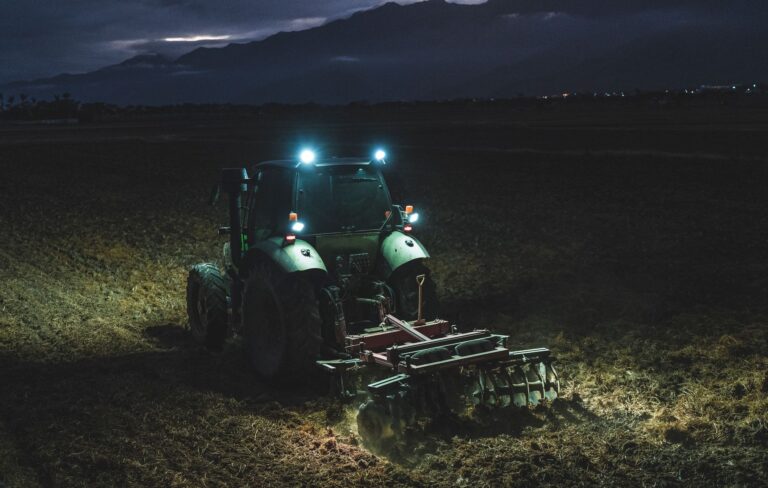
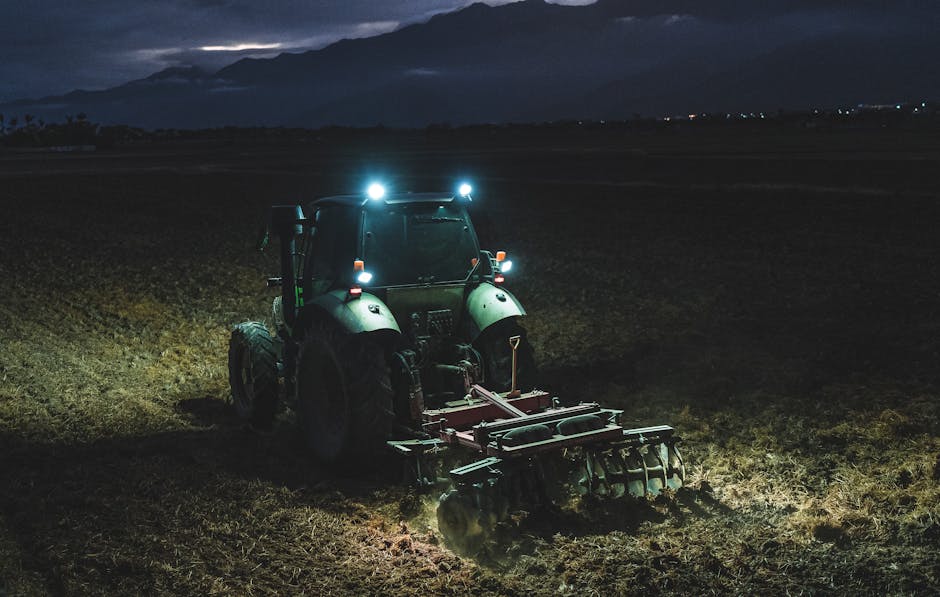
Field visibility is the secondary concern. Harvest seasons regularly push working hours into early morning darkness and late evening. Tractor headlights allow operators to spot obstacles, drainage ditches, and field boundaries that would otherwise be invisible. The difference between a 1,000-lumen halogen sealed beam and a 3,500-lumen LED unit is significant when working in a dark field at 5 am in November.
Tractor headlights are distinct from tractor work lights. Headlights face forward and provide a shaped beam for driving. Work lights mount on the cab roof, rear, or sides and throw a wide flood pattern to illuminate the working area around the machine. Both are important, but they serve different jobs.
Types of Tractor Headlight
Tractor headlights fall into three main design categories: sealed beam, composite (replaceable bulb), and LED conversion units. The type fitted to a tractor depends primarily on the age and model of the machine.
Sealed Beam Headlights
A sealed beam tractor headlight is a single unit in which the filament, reflector, and glass lens are permanently bonded together. When the filament fails, the entire unit requires replacement. Sealed beam headlights were the standard fitment on most tractors manufactured before the mid-2000s and remain common on older John Deere, Massey Ferguson, New Holland, and Case IH models. They typically come in two shapes: 5.75-inch round (also listed as 146 mm) and 7-inch round (178 mm), plus various rectangular sizes.
Sealed beam headlights are simple and robust. The sealed construction keeps moisture and dust out of the reflector cavity, which matters in agricultural environments. The trade-off is that the entire unit goes to waste when the filament burns out, and the reflector design is less efficient than modern alternatives.
Composite Headlights (Replaceable Bulb)
A composite tractor headlight separates the bulb from the housing. The housing contains the reflector and a polycarbonate or glass lens, while the bulb (typically H4, H7, or H1) slots in from the rear and can be replaced individually. Composite headlights became standard on mid-range and premium tractors from the late 1990s onwards.
The advantage of composite tractor headlights is cost and flexibility. Replacing a blown H4 bulb costs £5 to £15, compared with £15 to £40 for a complete sealed beam unit. Composite housings also accept LED conversion bulbs, which drop into the same H4 or H7 socket without changing the headlight housing.
LED Conversion Units
An LED conversion tractor headlight is a complete assembly that replaces either a sealed beam unit or a composite headlight housing with an integrated LED module. The LED elements, reflector, and lens are built into a single weatherproof unit. LED conversion headlights are available as direct-fit replacements for common sealed beam sizes (5.75-inch round, 7-inch round, standard rectangular) and typically connect using the original wiring harness.
LED conversion units represent the most significant upgrade available for older tractors. A single LED headlight produces 2,000 to 4,000 lumens whilst drawing 20W to 40W, compared with 1,000 to 1,500 lumens at 55W to 65W from a halogen sealed beam. The lifespan difference is equally stark: 30,000 to 50,000 hours for LED versus approximately 1,000 hours for halogen.
Halogen, LED, and Xenon: Tractor Headlight Technology Compared
Halogen, LED, and xenon (HID) are the three headlight technologies available for agricultural tractors. Each has different characteristics in terms of light output, lifespan, power consumption, colour temperature, and cost. The table below compares them side by side.
| Specification | Halogen | LED | Xenon (HID) |
|---|---|---|---|
| Lumen output | 1,000 to 1,500 | 2,000 to 4,000 | 3,000 to 3,500 |
| Lifespan | ~1,000 hours | 30,000 to 50,000 hours | 2,000 to 3,000 hours |
| Power draw | 55W to 65W per bulb | 20W to 40W per unit | 35W per bulb |
| Colour temperature | 3,200K (warm yellow) | 5,000K to 6,500K (daylight white) | 4,300K to 6,000K |
| Cost per unit | £5 to £15 (bulb) / £15 to £40 (sealed beam) | £30 to £120 (complete unit) | £40 to £80 (bulb) + £30 to £60 (ballast) |
| Warm-up time | Instant | Instant | 5 to 15 seconds to full brightness |
| Vibration resistance | Low (filament breaks under heavy vibration) | High (no filament) | Moderate (no filament, but ballast is sensitive) |
Which Technology Suits Tractor Use Best
LED tractor headlights offer the strongest combination of output, lifespan, and durability for agricultural applications. The absence of a filament makes LED headlights resistant to the constant vibration that tractors produce across rough ground, which is the primary cause of premature halogen bulb failure on farm machines. A halogen bulb rated at 1,000 hours under laboratory conditions often lasts significantly less on a tractor that spends its working life on uneven terrain.
Xenon headlights produce excellent light output (3,000 to 3,500 lumens) but require a separate ballast unit, add wiring complexity, and take 5 to 15 seconds to reach full brightness. The ballast is an additional point of failure. Xenon retrofits were popular in the 2010s but have largely been overtaken by LED, which matches or exceeds xenon output without the ballast requirement.
Halogen tractor headlights remain the lowest-cost option and are available everywhere. For a tractor that does limited road work or runs only a few hundred hours per year, halogen bulbs at £5 to £15 each may be the most economical choice. The running cost equation shifts in favour of LED for tractors that work long hours, particularly during autumn and winter when headlights run for extended periods each day.
Fitment and Compatibility: Getting the Right Tractor Headlight
Fitting the correct tractor headlight requires matching three things: housing size, connector type, and beam pattern. A mismatch in any of these three areas means the headlight either will not fit, will not connect, or will not produce a legal beam for road use.
Housing Size
Tractor headlight housings come in a limited number of standard sizes. The most common are 5.75-inch round (146 mm), 7-inch round (178 mm), and several rectangular formats. Measure the existing headlight across its face to confirm the size before ordering a replacement. LED conversion units designed as sealed beam replacements match these standard dimensions and drop into the original mounting bracket.
Connector Type
Tractor headlight connectors vary by manufacturer and era. Common types include Deutsch DT connectors (2-pin and 3-pin), AMP Superseal connectors, standard spade terminals, and H4/H7 bulb holders on composite headlights. Plug-and-play LED replacements come with a connector that matches the original wiring harness. Where the connector differs, an adapter loom or direct wiring is required. Always check the connector type before purchasing to avoid unnecessary rewiring.
Beam Pattern
Tractor headlights for road use must produce a dipped beam with a defined cutoff line. This cutoff directs light downward and to the left (in the UK) to avoid dazzling oncoming traffic. LED conversion units designed for road use replicate this beam pattern. LED units with a pure flood pattern (no cutoff) are suitable for field work only and must not be used as headlights on public roads.
The beam pattern matters more than raw lumen output for road safety. A 4,000-lumen LED headlight with a proper dipped beam cutoff is road-legal. A 4,000-lumen LED flood light with no cutoff is not, regardless of how bright it is.
UK Road-Legal Requirements for Tractor Headlights
Tractor headlights used on UK public roads must carry an E-mark (also called a UN ECE mark) or equivalent type approval. The E-mark is a small symbol stamped or printed on the headlight lens or housing, consisting of the letter E inside a circle followed by a number (identifying the approving country) and a regulation number.
Type Approval Regulations
Two UN ECE regulations apply to tractor headlights. UN R112 covers headlamps that use filament bulbs, gas-discharge (xenon) sources, or LED module light sources. UN R149 covers headlamps designed specifically for replaceable LED light sources. A tractor headlight marked with R112 or R149 approval has been tested and certified for road use.
What the Law Requires
The Road Vehicles Lighting Regulations 1989 require tractors driven on public roads to be fitted with forward-facing white lights. During the hours of darkness and in conditions of seriously reduced visibility, tractors must use dipped headlights. Main beam headlights must be dipped when following another vehicle or when oncoming traffic approaches. For full details on tractor lighting regulations, see the dedicated article.
Non-E-Marked Headlights
Tractor headlights without an E-mark can be used off-road and in the field without restriction. Many affordable LED headlights and work lights sold for agricultural use are not E-marked and are intended for off-road use only. Using a non-E-marked headlight on a public road risks a prohibition notice from the police and, if the headlight fails to produce a compliant beam pattern, creates a genuine safety hazard for other road users.
When browsing tractor headlights, check the product listing for E-mark or type approval confirmation if the headlight will be used on public roads.
Tractor Headlight Sizes by Brand
Tractor headlight size and type vary by manufacturer and model series. The following notes cover the most common fitments for the four major tractor brands sold in the UK. Always confirm the part number against the specific model and year of manufacture, as mid-series changes to headlight design do occur.
John Deere
John Deere tractors from the 20 Series and 30 Series (such as the 6420 and 6530) typically use 5.75-inch round sealed beam headlights. The 6000 and 7000 Series moved to composite headlights with H4 bulbs. The R Series (6R, 7R, 8R) and later models come with factory-fitted LED headlights. Aftermarket LED conversion headlights are widely available for the older sealed beam models and are a popular upgrade on 20 and 30 Series machines.
New Holland
Older New Holland TM and TS Series tractors use rectangular sealed beam headlights. The T6 and T7 ranges switched to composite headlights with H7 bulbs. The latest T7 Heavy Duty and T7 Long Wheelbase models are available with factory LED headlights. Rectangular LED conversion units that replace the original TM/TS sealed beams are a direct fit for these older models.
Massey Ferguson
Massey Ferguson 300 Series tractors use round sealed beam headlights. The 5400 and 6400 Series introduced composite H4 headlights. The current 8S and MF 7S models feature factory LED headlights. The 300 Series remains one of the most popular tractors in the UK second-hand market, and sealed-beam-to-LED conversion headlights are a common upgrade.
Case IH
Older Case IH MX and CX Series tractors use sealed beam headlights. The Puma and Maxxum ranges use composite headlights with H7 bulbs. The Optum and Magnum AFS Connect models come with factory LED headlights. Aftermarket LED replacements for the MX and CX sealed beam size are readily available.
How to Upgrade Tractor Headlights from Halogen to LED
Upgrading tractor headlights from halogen to LED takes between 30 minutes and 2 hours, depending on whether the replacement is a direct plug-and-play fit or requires adapter wiring. The following steps apply to the most common upgrade path: replacing a sealed beam or composite halogen headlight with an LED unit.
Step 1: Identify the Current Headlight
Remove the existing headlight or inspect it in place. Note the shape (round or rectangular), the size (measure across the face), and whether it is a sealed beam unit or a composite housing with a replaceable bulb. Record the part number if one is visible on the back of the unit.
Step 2: Check the Connector
Look at the wiring connector on the back of the headlight. Common types are a 3-pin sealed beam connector, an H4 bulb connector (3 spade terminals), an H7 connector (2 spade terminals), or a Deutsch DT plug. Photograph the connector to match it when ordering the replacement.
Step 3: Select an E-Marked LED Replacement
Choose an LED tractor headlight that matches the housing size and connector type. Confirm it carries an E-mark (UN R112 or R149) if the tractor uses public roads. Check that the unit produces a dipped beam pattern with a proper cutoff line, not a flood pattern.
Step 4: Disconnect the Battery
Isolate the battery before removing any headlight wiring. This prevents short circuits and protects the tractor’s electrical system.
Step 5: Remove the Old Headlight
Undo the mounting screws or retaining ring that holds the headlight in the housing bracket. Disconnect the wiring connector. Lift the old headlight out.
Step 6: Fit the New LED Unit
Place the new LED headlight into the mounting bracket. Secure it with the original mounting screws or the fixings supplied with the new unit. Connect the wiring. If the connector does not match, use an adapter loom or wire the new unit directly to the existing supply, observing correct polarity (positive, negative, and dipped/main beam feeds).
Step 7: Reconnect and Test
Reconnect the battery. Switch on the headlights and check that dipped beam and main beam both work. On some older tractors with simple relay circuits, LED headlights may flicker if the power draw is too low for the original relay to detect. Fitting a load resistor or upgrading the relay solves this.
Step 8: Adjust Alignment
Check the beam pattern against a wall or flat surface. The dipped beam cutoff should sit level with or slightly below the headlight centre height. Adjust the headlight alignment screws until the beam sits correctly. Misaligned tractor headlights dazzle oncoming traffic and reduce the driver’s own visibility.
For a more detailed walkthrough of the conversion process, Article 1.15 on halogen to LED upgrades will cover wiring diagrams and troubleshooting for specific tractor models.
Tractor Headlight Maintenance Tips
Regular tractor headlight maintenance extends bulb life and keeps beam quality at its best. Farm environments expose headlights to mud, dust, chemical spray residue, and constant vibration, all of which degrade performance over time.
Clean the lenses regularly. Mud and dust buildup on the headlight lens reduces light output significantly. Clean lenses with a soft cloth and mild soapy water. Avoid abrasive cleaners or scouring pads, which scratch polycarbonate lenses and cause permanent hazing.
Check alignment after rough fieldwork. Tractor headlights can shift out of alignment after heavy ploughing, disc work, or driving across rutted fields. A headlight that points too high dazzles other road users. A headlight that points too low reduces the driver’s forward visibility. Check alignment at the start of each season and after any particularly rough work.
Inspect wiring and connectors for corrosion. Tractor headlight connectors are exposed to moisture, mud, and agricultural chemicals. Green or white corrosion on connector pins increases electrical resistance, which dims the headlight and generates heat. Clean corroded connectors with electrical contact cleaner and apply dielectric grease to prevent recurrence.
Replace rubber boots and gaskets. The rubber boot on the back of a composite tractor headlight keeps moisture out of the housing. A cracked or missing boot allows condensation to form inside the lens, which scatters the beam and eventually corrodes the reflector. Replacement boots cost under £5 and take 2 minutes to fit.
Handle halogen bulbs with clean gloves. Fingerprints on a halogen bulb create hot spots on the glass envelope when the bulb heats up. These hot spots cause uneven thermal expansion and shorten bulb life. If a halogen bulb is touched with bare fingers, clean it with isopropyl alcohol before fitting.
Check for condensation inside the lens. Visible moisture droplets or fogging inside a tractor headlight lens indicates a failed seal. On sealed beam units, this means the unit needs replacing. On composite headlights, check the bulb boot, lens gasket, and any vent plugs for damage. Persistent condensation degrades reflector coatings and reduces light output.
Choosing the Right Tractor Headlight
A tractor headlight upgrade improves visibility, reduces running costs, and makes road driving safer. LED conversion units offer the largest gains for tractors still running sealed beam or halogen headlights, with 2 to 4 times the light output, 30 to 50 times the lifespan, and lower power draw. For tractors that operate on public roads, an E-marked headlight with a proper dipped beam pattern is a legal requirement.
Matching the headlight to the tractor’s housing size, connector type, and beam pattern requirements is the key to a successful upgrade. The brand-specific notes above cover the most common fitments for John Deere, New Holland, Massey Ferguson, and Case IH, but always confirm the part number against the specific model and year.
Browse the current range of tractor headlights or read the full guide to tractor lighting for coverage of all lighting positions on an agricultural tractor.