Driving Lights vs Headlights: What Is the Legal Difference in the UK

In this guide
A driving lamp is an auxiliary forward-facing lamp that supplements the main beam of a vehicle’s headlamps, while a headlamp is the principal forward illumination lamp required by law on every road-going vehicle. The two devices look similar, mount on similar brackets and use similar bulbs, but they sit in different legal categories under UK and ECE regulations. A driving lamp may only be used when the headlamp main beam is also on. A headlamp must be fitted, dippable and aimed within the legal tolerance. This guide covers the optical, regulatory and practical differences between driving lights and headlights, with the rules that apply to tractors and farm vehicles.
What a Headlamp Is
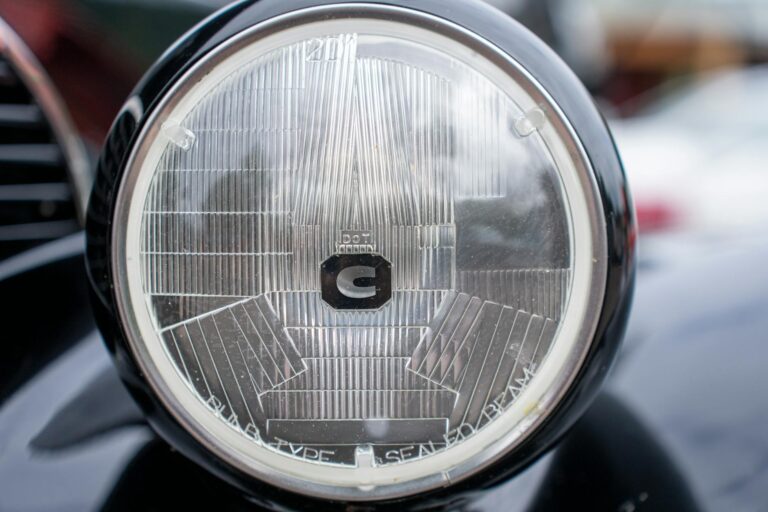
A headlamp is the principal forward-facing lamp that a vehicle must carry by law for use on the public road. Most motor vehicles with three or more wheels must be fitted with two headlamps, mounted on the front of the vehicle, capable of producing a dipped beam and a main beam, and aimed to deliver legal illumination without dazzling other road users. Slow vehicles have exemptions: dipped beam is not required on a vehicle with a maximum speed of 15 mph or less, and main beam is not required at 25 mph or less.
A headlamp produces two beam modes. The dipped beam (low beam, passing beam) carries a sharp horizontal cut-off line that throws light onto the road ahead but not above the eye line of oncoming drivers. The main beam (high beam, full beam) removes the cut-off and throws light as far as the lamp can project, typically 100 to 250 metres ahead.
A headlamp must be of an approved type. Current headlamp approval regulations include ECE R112 (asymmetric beam headlamps with filament or LED light sources), ECE R98 (gas discharge), ECE R113 (symmetric beam, including some motorcycle units), and ECE R123 (adaptive front-lighting); older lamps carry approvals such as R1, R8 or R20, and older vehicles may carry a British Standard mark. The approval mark appears as an “E” inside a circle followed by a country number (E1 for Germany, E4 for the Netherlands, E11 for the UK), with a code and a series of digits identifying the approval.
The driver controls the headlamp from a dashboard switch or a stalk on the steering column, with the main-beam/dipped-beam selection by a separate switch position. The dipped beam is the default for night driving, town driving and any condition where another road user is in front. The main beam is for open road with no other traffic.
What a Driving Lamp Is
A driving lamp is an auxiliary forward-facing lamp fitted in addition to the headlamps to extend the reach of the main beam pattern at night. Driving lamps are not required by law. A vehicle is legal without any driving lamps fitted, provided the headlamps meet the legal standard.
A driving lamp produces one beam mode: a long-range, narrow-spread beam with no cut-off line. The beam aims as far down the road as possible, typically 200 to 600 metres for a halogen unit and 400 to 1,000 metres for a premium LED unit. The light pattern is concentrated into a tight forward cone, not spread sideways.
Driving lamps mount in pairs on the front of the vehicle, on the bumper, the bull bar, the A-frame, a roof bar or the bonnet. The mounting position varies with vehicle type. Tractors carry them on the cab roof, on the front weight frame or on the bonnet edge.
A driving lamp is approved as a main-beam lamp, usually under ECE R112 (or R98 or R113, and on older lamps R1, R8 or R20). The approval code shows R or HR for a main beam, and a reference number (for example 12.5 or 37.5) shows its intensity. A driving lamp without a main-beam approval is not a legal road-use auxiliary.
A driving lamp differs from a fog lamp, a spotlight, a work lamp and a light bar in function and approval. A fog lamp produces a wide, low beam with a sharp upper cut-off for use in fog. A spotlight is a narrow-beam handheld or pillar-mounted lamp, not road approved. A work lamp produces a flood or spot pattern for off-road illumination only and is not road approved as a forward lamp. A light bar is a multi-LED bar, road-legal in certain configurations under specific ECE approvals but most often sold for off-road use only.
The Optical Difference Between Headlamps and Driving Lamps
The optical difference between a headlamp and a driving lamp is the cut-off line. A headlamp has one. A driving lamp does not.
The dipped headlamp beam runs as a low-mounted bath of light with a sharp horizontal upper edge and a small upturn on the nearside (left in the UK) that throws extra light onto the verge and road signs. The pattern keeps all light below eye level for oncoming drivers at typical road geometry. The main beam adds a strong forward column above the dipped pattern, with no cut-off, used when no oncoming vehicle is present.
The driving lamp beam runs as a narrow, intense forward column with no cut-off at all. Light goes forward and slightly sideways but mostly forward. The beam reach is longer than a main beam, and the intensity at maximum reach is higher.
The optical purpose is different. A dipped headlamp lights the road for the driver while keeping other road users out of dazzle. A driving lamp extends the main beam reach for high-speed open-road driving where every metre of forward visibility matters. The two together (main beam plus driving lamps) deliver the maximum legal night-driving illumination.
The lumen output for a typical halogen headlamp main beam is 1,200 to 1,800 lumens per lamp. A typical halogen driving lamp delivers 1,500 to 3,500 lumens per lamp. An LED driving lamp delivers 3,000 to 12,000 lumens per lamp. The combined output on full beam with driving lamps on can reach 25,000 lumens of forward illumination on a tractor with a roof-mounted LED driving pair plus LED main beam headlamps.
Road-approved driving lamps emit white light. LED units typically sit at 5,000 to 6,500 Kelvin and halogen units at around 3,200 Kelvin (warm white). A strongly blue-tinted lamp is unlikely to meet the white colour limits in its approval.
UK Legal Definitions and Approval Marks
The Road Vehicles Lighting Regulations 1989 do not have a separate category for driving lamps. A driving lamp counts as a main-beam headlamp, so it must meet the same rules as any other main-beam lamp.
A headlamp is “a lamp used to illuminate the road in front of a vehicle and which is not a front fog lamp” (regulation 3). A driving lamp throws a main beam, so it is treated as an optional main-beam headlamp.
The approval requirement comes from RVLR itself. Schedule 5 requires a main-beam headlamp on a vehicle first used on or after 1 April 1986 to carry an approval mark or a British Standard mark. A headlamp normally carries an approval mark under R112, R98, R113 or R123 (or an older regulation). A driving lamp must carry a main-beam approval mark.
The approval mark sits on the lens or the body of the lamp. The format is the letter E inside a circle with a country code number, an approval number, and a code showing what the lamp is approved as. An E11 marking identifies a UK type approval. An E4 marking identifies a Dutch type approval. An E1 marking identifies a German type approval. All ECE approvals are recognised in the UK under the UNECE 1958 Agreement, to which the UK remains a party.
A lamp without an approval mark is sold as “off road use only” and is not legal as a forward-facing lamp on a UK road. A lamp marked SAE only (the US standard) carries no UK or ECE approval, so it does not meet the marking rule. Vehicles first used before 1 April 1986 have no approval-marking requirement for main-beam headlamps under RVLR, but the lamps must still give a proper beam.
The Road Vehicles Lighting Regulations require two main-beam headlamps on most vehicles and allow extra optional ones, which must meet the same switching rules. The UN R48 installation rules also cap the total intensity of all main-beam lamps on a vehicle, shown by adding up the reference numbers on the lamps, so check the totals before adding more.
When You Can Use Driving Lamps on the Road
Driving lamps must go out whenever the driver switches to dipped beam. The rule comes from Schedule 5 of the Road Vehicles Lighting Regulations 1989, which requires every main-beam lamp to be extinguished by the same control that switches on the dipped beam.
The reason for the rule is the dazzle prevention principle. A driving lamp has no cut-off line, so light from a driving lamp goes wherever the beam aims. If the headlamps are on dipped beam, the dipped pattern protects oncoming drivers. A driving lamp switched on at the same time wipes out that protection. The law links the two so the driving lamp can only come on when the driver has already chosen to use main beam, when no oncoming traffic is present.
The wiring requirement that follows is a relay switched by the main beam circuit. When the driver selects dipped beam, the relay drops out and the driving lamps switch off automatically. When the driver selects main beam, the relay closes and the driving lamps come on. This wiring is the standard professional install for an auxiliary lamp kit on any UK road vehicle.
A driver who fits a manual on/off switch for driving lamps without a dipped-beam cut-out does not meet the Schedule 5 switching rule, and using lamps so as to dazzle other road users is an offence under regulation 27. Either can lead to a fixed penalty or prosecution.
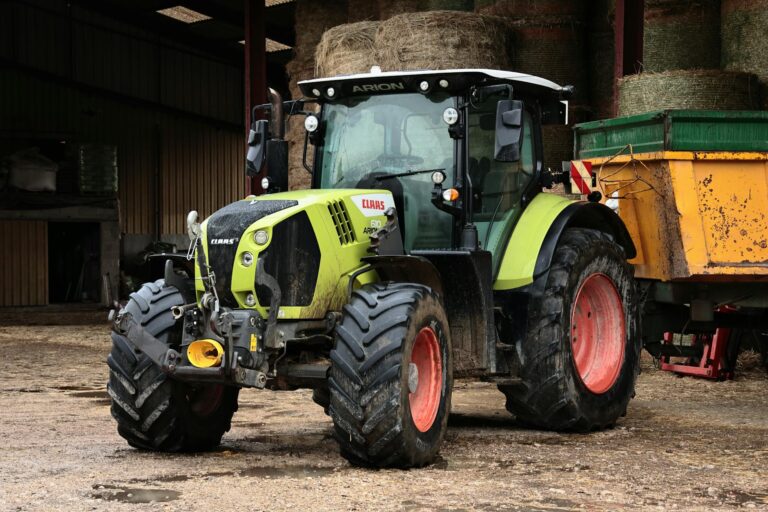
The same use rule applies to tractors. A tractor with a roof-mounted LED driving lamp pair must wire those lamps to the main-beam circuit. The lamps come on with main beam and switch off with dipped beam.
Driving lamps may be used at any speed on any road where main beam is permitted, where no other road user would be dazzled. The driver must dip the main beam (and therefore the driving lamps) when meeting oncoming traffic, when following another vehicle closely enough to dazzle its driver, and in built-up areas with street lighting.
Driving Lamps on Tractors and Farm Vehicles
Tractors and farm vehicles are subject to the same driving-lamp rules as cars when used on the public road, with one practical difference: most tractor field-work lights are not driving lamps, they are work lamps, and the rules for work lamps are different.
A driving lamp on a tractor is a road-legal auxiliary forward lamp with a main-beam approval (typically ECE R112), wired to the main beam circuit, used to extend forward visibility on dark unlit roads at night. The lamps mount on the bonnet, the front weight frame or the cab roof front edge. Several makers, including Hella and Lazer Lamps, sell road-approved driving lamps.
A work lamp on a tractor is a non-road-approved high-output flood or spot lamp used to illuminate the work area around the tractor for ploughing, harvesting, spraying or loader work. Work lamps mount on the cab roof, the loader frame, the rear of the cab or the implement. They are not approved for forward use on the public road. They may be fitted to the tractor and must be switched off (or covered) when the tractor moves on a public road. The standard switching arrangement is a dedicated work-lamp switch independent of the headlamp circuit.
The legal distinction between a tractor driving lamp and a tractor work lamp comes down to the approval mark. A lamp with a main-beam approval mark (for example under ECE R112) is a driving lamp. A lamp marked ECE R10 only (the EMC approval) and sold as a “work lamp” is a work lamp. A lamp with no approval mark at all is off-road only.
Tractors carrying multiple forward-facing lamps must have each lamp wired to the correct circuit: headlamps to the main lighting switch, driving lamps to the main-beam circuit via a relay, work lamps to a separate work-lamp switch that does not energise on the road. A work lamp may only be lit to light a working area or the scene of an accident, breakdown or roadworks, so a work lamp lit while driving is an offence under regulation 27 of the Road Vehicles Lighting Regulations, which can lead to a fixed penalty or prosecution.
The roof-mounted LED light bars common on modern tractors fall into one of three categories: road-legal driving lamps (small minority, carrying a main-beam approval such as R112), road-legal position or marker lamps (some slim bars), or off-road work lamps (the majority). The buyer must check the approval marking on the bar before fitting and switching for road use.
Wiring and Switching Requirements
The wiring for a road-legal driving lamp on a UK vehicle uses a relay switched by the headlamp main-beam circuit, plus a separate driver-accessible switch that allows the driver to disable the driving lamps independently.
The relay coil takes its signal from the main beam wire (often blue with a white tracer on older British looms, but colours vary, so check the wiring diagram). The relay contacts switch the live feed to the driving lamps from the battery or from a permanent-live fused circuit. The fuse rating sits at 1.5 to 2 times the calculated steady-state lamp current.
A driver-accessible disable switch allows the driver to keep the driving lamps off even with main beam selected, for situations where the extra light is not wanted. The switch sits in series with the relay coil or in series with the lamp feed. The wiring diagram appears in the installation manual of every reputable driving-lamp kit (Hella, Lazer, Vision X, Nordic Lights all publish wiring diagrams in their product literature).
A relay is required for two reasons. The first is current capacity: the main beam circuit in many vehicles is not rated for the additional 5 to 20 amps of an auxiliary lamp pair, and a direct connection overloads the headlamp switch. The second is voltage drop: a relay close to the lamps gives them a full-voltage feed, while a long wire run from the cabin switch drops voltage and dims the beam.
A driving lamp wired without a main-beam interlock, switched only by a manual cabin switch, is electrically functional but legally non-compliant. The Schedule 5 switching rule applies to every vehicle on the road, whether or not it needs an MOT; farm tractors used in the agricultural tax class need no MOT but must still meet it.
LED driving lamps draw less current than halogen units of equivalent output, but the relay and main-beam interlock are still required. A 9,000-lumen LED driving lamp pair drawing 8 amps total still needs the relay and still needs the main-beam interlock. The current is lower than halogen, but the legal requirement does not depend on current.
The same wiring principles apply to all auxiliary forward lamps with no cut-off: driving lamps, spotlight pairs, road-legal LED bars approved as driving lamps, and any other front-facing main-beam supplement. The fitting standard is consistent across vehicle types.
Related Articles
- The tractor headlights guide covers all front-facing tractor illumination.
- Halogen headlamp bulb types covers H1, H3, H4 and H7 bulbs used in headlamps and driving lamps.
- LED light bars road legal UK covers the legal position on LED bars and driving lamps.
- Fog lamps explained covers the difference between fog lamps and driving lamps.
- Road Vehicles Lighting Regulations is the primary legislation reference.
- LED headlamp conversions covers the LED route for primary headlamps.
- Shop the full range of auxiliary lamps for road-legal driving lamps and tractor fitment.