Can You Use LED Light Bars on Public Roads in the UK
In this guide
- What an LED Light Bar Is and How UK Law Sees It
- The Road Vehicles Lighting Regulations 1989
- Work Lights vs Auxiliary Driving Lamps
- E-Mark and ECE Approval for Light Bars
- When a Light Bar Must Be Covered or Switched Off
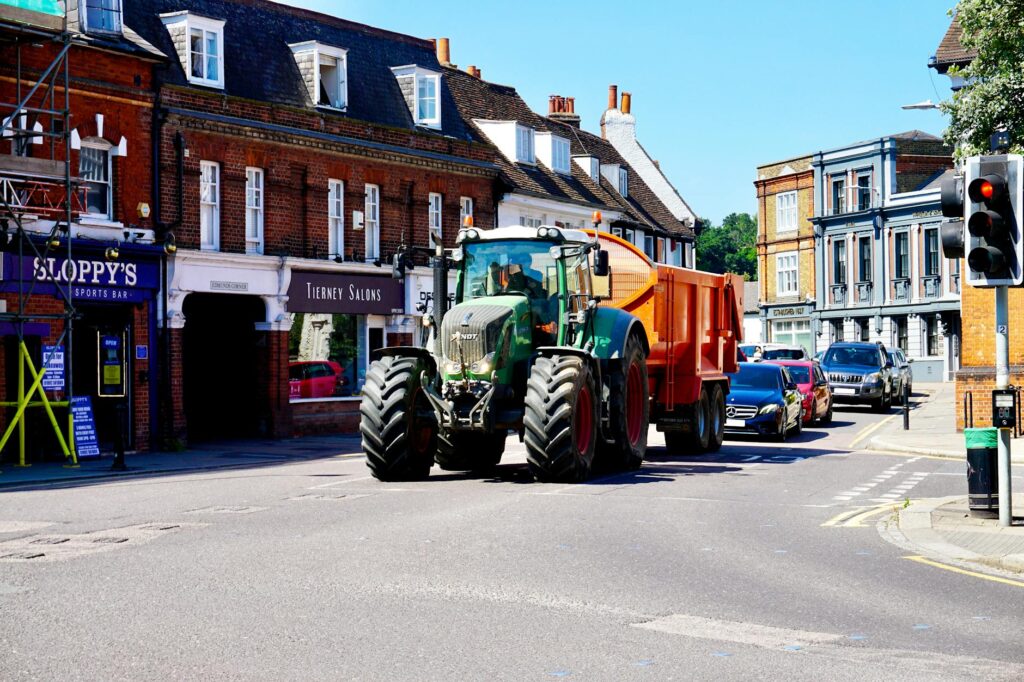
- Tractors and Agricultural Vehicles
- What Gets You Stopped or Failed at MOT
- How to Fit a Light Bar Legally
- Summary
LED light bars are road legal in the UK only when they are switched off, fitted as approved auxiliary driving lamps, or fitted as work lamps used off the public highway. The Road Vehicles Lighting Regulations 1989 (RVLR) restrict what kinds of forward-facing lights a vehicle may show on a public road, and most LED light bars sold for agricultural and 4×4 use do not hold the type approval required for road use. They can be fitted, but they cannot be switched on whilst the vehicle is moving on a UK road.
This guide explains the regulatory framework, the difference between a work lamp and an auxiliary driving lamp, when a light bar must be covered, and how a tractor or farm vehicle stays compliant. The detail comes from RVLR 1989 (as amended), ECE Regulations 7, 87 and 112, and DVSA enforcement guidance current to 2026.
What an LED Light Bar Is and How UK Law Sees It
An LED light bar is a horizontally-mounted housing containing multiple LED chips behind a single lens, designed to throw a wide spread or long-range beam from the front, side, or top of a vehicle. Common sizes run 4 inch to 50 inch, with rated outputs from 20W to 600W and lumen outputs from 1,500 to 60,000.
UK law does not have a category called “light bar”. The RVLR classifies every forward-facing lamp on a vehicle by function, not by physical shape. A light bar fitted to the front of a Land Rover or a tractor cab is treated under one of these existing categories:
- Headlamp (dipped or main beam) – approved under ECE R112 or R98
- Front position lamp (sidelight) – approved under ECE R7
- Daytime running lamp (DRL) – approved under ECE R87
- Front fog lamp – approved under ECE R19
- Driving lamp / auxiliary main beam – approved under ECE R112 (Class A or B)
- Work lamp – not regulated for road use because it is for off-highway operation only
A light bar is legally a work lamp by default, because the vast majority of light bars sold do not hold any of the ECE approvals listed above. Work lamps may be fitted to a road vehicle but may not be used as forward lighting whilst the vehicle is moving on a public road.
The Road Vehicles Lighting Regulations 1989
The RVLR 1989 is the primary statutory instrument governing vehicle lights in the UK. The relevant sections for light bars are Schedule 1 (lamps required and permitted), Schedule 9 (front position lamps and headlamps) and Regulation 11 (use of work lamps).
Regulation 11 prohibits the use of any “work lamp” while the vehicle is in motion on a public road. The regulation defines a work lamp as a lamp used to illuminate a working area or the scene of an accident, breakdown or roadworks. A light bar fitted as a non-approved auxiliary, used to light up a field or yard, falls into this category.
Schedule 1 sets the maximum number of forward-facing lamps allowed in each category. A standard car or 4×4 can hold a maximum of two main-beam headlamps plus a maximum of four auxiliary driving lamps, with all driving lamps wired to the main beam circuit so they only operate when main beam is on. A tractor follows the same logic but with more flexibility for working lamps used off-highway.
The penalty for breaching RVLR is a fixed penalty notice (typically GBP 100 plus 3 points on a car licence) or, in serious cases, a Construction and Use prosecution.
For the wider regulatory picture, see the road vehicles lighting regulations.
Work Lights vs Auxiliary Driving Lamps
The legal distinction between a work light and an auxiliary driving lamp is the single most important point in any light bar conversation. The two categories sit on opposite sides of the road-use line.
Work lamps illuminate a working area, not the road ahead. They have wide flood beams, no precise cut-off, and no requirement for type approval. Tractors, telehandlers, combines, and breakdown vehicles all carry them. Work lamps are legal to fit but illegal to use whilst driving on a public road. They must be switched off the moment the vehicle moves onto a road.
Auxiliary driving lamps illuminate the road ahead at long range to extend main beam. They have a tightly focused spot or pencil beam, hold ECE R112 approval, carry an “E” type-approval mark on the lens, and must be wired to the main-beam circuit. Up to four auxiliary driving lamps may be fitted to a road vehicle. They go off automatically when main beam goes off, which means they cannot be used in towns or with dipped beam.
Most LED light bars sold for the 4×4 and agricultural market are work lamps in the legal sense. They have flood patterns, no cut-off, and no E-mark. A small number of premium light bars (such as Lazer Lamps’ Triple-R range with ECE R112 approval) are sold as approved auxiliary driving lamps and can be used on UK roads with main beam.
For a beam pattern primer, see work light beam patterns.
E-Mark and ECE Approval for Light Bars
An E-mark is a small “E” inside a circle followed by a country code number, printed or moulded on the lens or housing of an approved lamp. The mark proves the lamp has been tested against the relevant ECE regulation. Without an E-mark, a forward-facing lamp cannot be used legally on a UK road.
The relevant E-marks for a light bar are:
- E-mark with R112 – approved as a headlamp or auxiliary driving lamp (main beam aid)
- E-mark with R87 – approved as a daytime running lamp
- E-mark with R19 – approved as a front fog lamp
- E-mark with R7 – approved as a front position lamp
Each approval covers a specific function. A light bar approved as a DRL under R87 cannot be used as a driving lamp under R112. The marking on the lens defines the function for which the unit is legal.
Buyers should check three things before fitting a light bar to a road-going vehicle:
- Is there an E-mark on the lens or housing?
- Which ECE regulation number sits next to the E-mark?
- Does the regulation match the intended use (DRL, driving lamp, fog, position)?
If any of the three checks fail, the light bar is a work lamp in legal terms and cannot be used on the road.
The DVSA does not maintain a public list of approved light bars. The buyer takes the manufacturer’s word and the lens marking. Reputable manufacturers such as Lazer Lamps, Hella, ABL, LED Autolamps and Truck-Lite mark their road-legal products clearly. Cheaper imports rarely hold any approval despite marketing claims.
When a Light Bar Must Be Covered or Switched Off
A non-approved light bar must be either switched off or, in many cases, physically covered when the vehicle is on the road. Two separate rules apply.
Switched off rule. Work lamps may not operate whilst the vehicle is moving on a road. The light bar can stay fitted, the wiring can stay live, but the switch must be off and the unit must not be illuminated. This rule applies to all road vehicles including tractors.
Covered rule. The covered rule is informal in UK law but recommended by DVSA enforcement officers. A non-approved forward-facing lamp visible from the front of a moving road vehicle can be challenged even when switched off, because police and DVSA officers have no way of confirming it is unpowered. A black plastic or vinyl cover over the lens removes any doubt and removes the risk of a stop-and-search. Many UK 4×4 owners now travel with a Velcro cover over their light bar and remove it for off-road or trail use.
The covered rule is not a written legal requirement, but in practice it removes the most common cause of light bar enforcement: a passing patrol officer noticing a non-E-marked lamp on the front of a vehicle.
Tractors and Agricultural Vehicles
Tractors and agricultural trailers fall under the RVLR 1989 the same way road vehicles do, but with two practical differences. Most agricultural use of light bars happens off-road, and tractors are not subject to MOT testing.
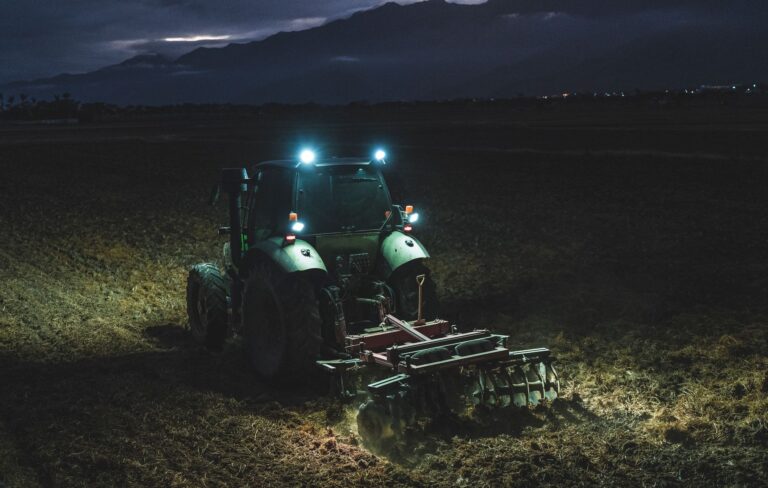
Off-road use. A tractor working a field at night may use any light source it likes, of any output, mounted anywhere. The RVLR does not regulate non-public-road use. A 50 inch 600W LED light bar across the cab roof is legal in the field. The same light bar is illegal as soon as the tractor pulls onto a public road and switches it on.
On-road use. A tractor on a public road follows the same auxiliary lighting rules as a car. Approved driving lamps may be used with main beam. Non-approved light bars must be off. Beacons (different category, ECE R65 approved) may be on at any time the tractor is doing slow agricultural work.
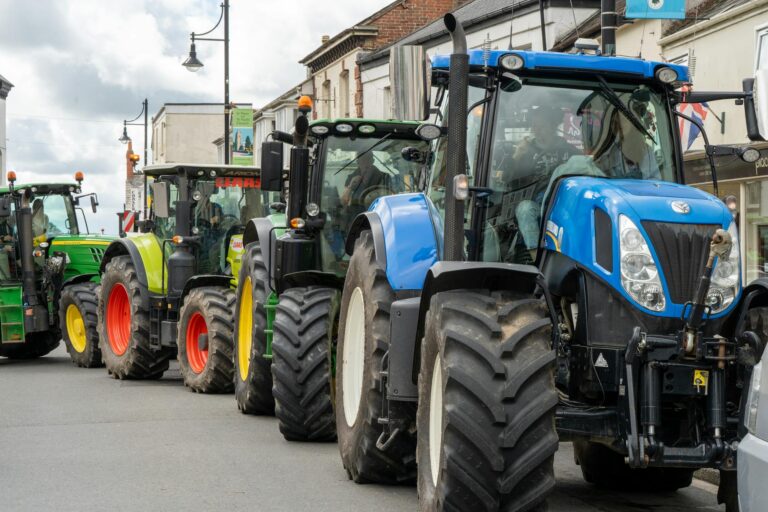
MOT exemption. Tractors are not subject to the MOT inspection that catches non-compliant lighting on cars. Enforcement falls to roadside checks by police or DVSA. In practice, prosecutions for non-approved light bars on tractors are uncommon but not unknown, particularly during harvest convoys where multiple machines run on roads at night.
For a fuller treatment of tractor lighting law, see tractor lighting regulations UK and tractor road legal lights.
What Gets You Stopped or Failed at MOT
The MOT inspection manual covers vehicle lighting under section 4. The key MOT failure points for light bars on cars, vans and 4x4s are:
- A non-approved forward-facing lamp visible from the front of the vehicle (failure if switched on or visibly able to switch on)
- More than four auxiliary driving lamps fitted (instant failure)
- Lamp emitting white light to the rear (failure)
- Lamp emitting red light to the front (failure)
- Driving lamps not wired to the main-beam circuit (failure)
- Driving lamps mounted higher than the main headlamps in many cases (advisory or failure depending on circumstances)
Roadside police stops add the additional points:
- A switched-on non-approved light bar whilst moving on a road
- A light bar emitting glare onto oncoming traffic
- A light bar pointing in a way that dazzles other road users
A typical penalty for a first offence is a fixed penalty notice. Repeat or aggravating circumstances can lead to prosecution under the Construction and Use Regulations.
How to Fit a Light Bar Legally
Three clean paths exist for a UK road vehicle owner who wants a light bar.
Path one: approved auxiliary driving lamps. Buy a light bar that holds ECE R112 approval as an auxiliary driving lamp. Confirm the E-mark and the R112 number on the lens. Wire it to the main-beam circuit so it goes off automatically with main beam. Fit no more than four such lamps total across the front of the vehicle.
Path two: work lamp, off only on road. Fit a non-approved light bar as a work lamp. Wire it to a clearly labelled switch on the dashboard. Use it only when the vehicle is stationary on private land or moving off the public road. Fit a cover for the lens.
Path three: tractor for field use only. A tractor that almost never sees a public road can run any light bar it wants for field work, with no road-use considerations.
Before buying, confirm the manufacturer’s road-legal claims with the lens marking. A “road legal” headline on a product page that does not show an E-mark on the lens is marketing, not law.
For products and beam pattern guidance, see beacon light bars (which covers ECE R65 amber beacon bars), and the wider Agri Lighting light bar range for both work and approved driving applications.
Summary
LED light bars are legal to fit but rarely legal to use on UK roads, because most light bars on the market are work lamps in the legal sense and cannot operate whilst the vehicle is moving on a road. The exceptions are units that hold ECE R112, R87, R19 or R7 approval, marked clearly with an E-mark and the relevant regulation number. Tractors follow the same rules as other road vehicles when on the road, but face no equivalent restrictions in the field. The safest position for any UK road vehicle owner is to buy approved auxiliary driving lamps for road use, keep work lamps switched off on the road, and cover the lens to remove any roadside doubt.