Self-Propelled Sprayer Lights: Night Spraying Safely with the Right Setup
In this guide
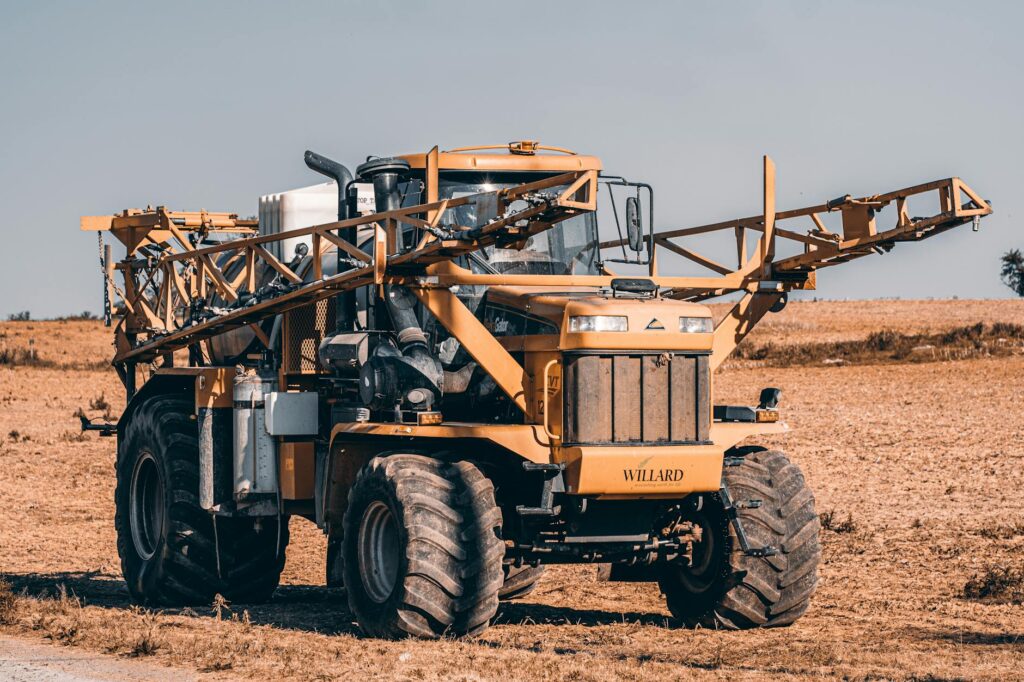
Self-propelled sprayer lights are the combined set of work lamps, boom-mounted lights, road lighting and warning beacons fitted to a self-propelled crop sprayer. The setup serves two jobs at once. It lights a 24-metre to 36-metre boom across the crop at field walking pace, and it keeps the machine road-legal and visible during early-morning or late-evening transit between fields. A correct lighting setup turns a stressful night job into a controlled one, and it keeps the operator the right side of the Road Vehicles Lighting Regulations on UK roads.
This guide walks through the lighting types fitted to a modern self-propelled sprayer, the rules that apply on UK roads, and the practical choices that separate a setup that works from one that frustrates the operator at 2am.
Why sprayer lighting matters more than most farm vehicles
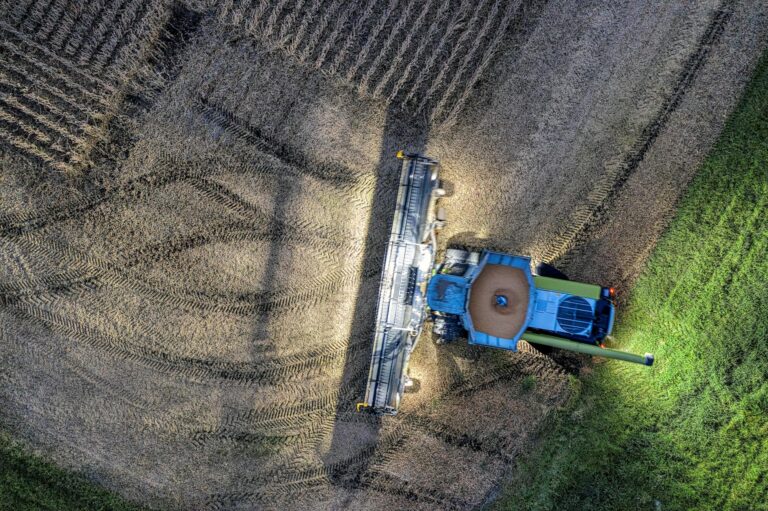
Self-propelled sprayer lighting protects the application window, the crop and the operator. Spraying windows in UK arable rotations are tight. Wind, dew, leaf surface temperature and approaching rain all narrow the hours in which a chemical can be applied legally and effectively. Pre-harvest desiccation, late-season fungicide passes and pre-emergence herbicide work all push spraying into the dark. Without proper lighting, the operator misses tramline edges, overspray drifts onto headlands and boom strikes happen.
Sprayer lighting also doubles as road lighting. A self-propelled sprayer with a 36-metre boom can weigh well over 10 tonnes loaded and is often 3 metres or more wide with the boom folded. On the road it must carry the lamps the Road Vehicles Lighting Regulations 1989 require for its design speed, kept clean and working, and if its maximum design speed is 25 mph or less it must show at least one amber beacon on an unrestricted dual carriageway. Most operators run the beacon on every road journey, which the law allows whenever it is necessary or desirable to warn others of the vehicle.
The third reason is visibility to other road users. A high-set cab, narrow road wheels and a long wheelbase make a sprayer look unfamiliar at distance. Strong forward and rearward lighting reduces the chance of a closing motorist misjudging speed.
Boom lights for night spraying
Boom lights are the sprayer lights that make night spraying possible. They illuminate the spray boom and the area immediately under the nozzles. Boom lights mount along the sprayer boom at intervals of 3 to 6 metres, depending on boom length and the operator’s preference, and they point downward and slightly outward to light the crop surface, the nozzles and the spray pattern.
Boom lighting setups use 3 main approaches:
- Discrete LED work lamps spaced along the boom (6 to 12 lamps on a 24-metre boom)
- A continuous LED light bar mounted to the rear face of the boom
- Manufacturer-fitted nozzle lights that illuminate each spray triplet
Output requirements are lower than tractor work lighting because the throw distance is short. A 1,500 to 2,000 lumen flood lamp with a 90-degree to 120-degree beam pattern suits boom work. Spot beams are wrong for this job. The operator does not need distance, they need a wide even wash that shows up blocked nozzles, missed strips and the cone shape of each fan.
Mounting needs careful thought. Boom lights live through 200 to 400 hours of vibration per season, wash-downs with detergent and chemicals, and the constant flex of a wide aluminium or steel boom. Use lamps rated to IP69K with stainless or zinc-plated brackets and route the cable inside the boom truss where possible. Read more on ingress protection ratings for agricultural work lamps to choose a lamp that survives more than one season.
Colour temperature matters for spray work. Many operators find a 5,000K to 6,000K cool white lamp shows the spray fans and blocked nozzles more clearly than warmer light.
Cab and approach work lights
Cab-mounted work lights handle two jobs. They light the area around the wheels for turning at the headland, and they show the operator the ground approaching the boom. A typical self-propelled sprayer fits 4 to 6 cab-roof work lamps at the front and 2 to 4 at the rear. Modern Bateman, Househam, Chafer and Agrifac sprayers typically offer LED roof clusters, often as standard depending on model and specification.
Front cab work lights need higher output than boom lights because they cover 20 to 40 metres of forward ground. A 4,500 to 6,500 lumen lamp with a combo or driving beam pattern fits this role. Two lamps angled slightly outward give better headland coverage than one centred lamp.
Rear cab work lights light the rear axle, the rinse tank and the boom centre section. These lamps see the most splash and chemical contact, so they need the highest ingress protection rating and the most robust connector. Deutsch DT-series connectors handle this environment well, ordinary spade terminals do not.
A separate switch on the cab armrest for boom lights, front work lights and rear work lights stops the operator overloading the spray monitor’s auxiliary outputs and lets each circuit be isolated for fault-finding.
Road lights for transit between fields
Road lighting on a self-propelled sprayer must meet the same standards as any agricultural vehicle on a UK road. The Road Vehicles Lighting Regulations 1989 (RVLR) set the obligatory lamps: front and rear position lamps, dipped beam headlamps, direction indicators, red rear reflectors and a rear number plate lamp, with hazard warning lights where indicators are fitted. Stop lamps and main beam are also obligatory on a machine designed for more than 25 mph. Many sprayers run at 40 km/h or 50 km/h, so check which side of 25 mph your machine sits. Any lamp that is fitted must work.
Wide machines trigger extra requirements. A sprayer wider than 2.55 metres in road trim is a special-type agricultural vehicle and is limited to 20 mph (12 mph over 3.5 metres), with a maximum width of 4.3 metres. Over 3 metres wide, the police must be told in advance if it will use a road with a speed limit of 40 mph or less or travel more than 5 miles. Over 3.5 metres it needs an attendant. Wide machines should also have their outer edges clearly marked and lit so other drivers can judge the width.
LED upgrades for road lighting are road legal in the UK if the lamp carries the right approval mark (E11 for the UK, or another UNECE country number such as E1 or E4). Aftermarket LED headlamp upgrades for older Bateman or Househam sprayers are available, but check the E-mark first. Read LED light bars and road legality for the rules on supplementary forward lighting.
Beacons and warning systems
Amber beacons signal slow-moving status to other road users. Regulation 17 of the Road Vehicles Lighting Regulations requires a vehicle with four or more wheels and a maximum design speed of 25 mph or less to show at least one amber beacon on an unrestricted dual carriageway (speed limit over 50 mph), unless it is only crossing it. On other roads the beacon is not compulsory, but the law allows it whenever it is necessary or desirable to warn others of the vehicle, which on a slow, wide sprayer is most journeys.
Mount options for sprayer beacons include:
- DIN pole mount on the cab roof, 200mm to 600mm pole height
- Bolt-on flange mount direct to the cab roof
- Flexi DIN mount that bends out of the way for low buildings
- Magnetic beacon as a portable backup
- 8 boom lamps, 2,000 lumen LED, IP69K, flood beam, 5,500K
- 4 front cab work lamps, 5,000 lumen LED, combo beam
- 2 rear cab work lamps, 4,000 lumen LED, flood beam
- 2 amber beacons, ECE R65, LED
- Upgraded LED tail lamps and indicators
Two beacons are standard on a self-propelled sprayer, one on each rear cab corner, to ensure visibility from both sides. A roof-mounted light bar combining work lights and amber strobes gives the best all-round visibility for road transit and yard manoeuvres. The bar version saves cab roof real estate compared with two separate beacons and a row of work lamps. Compare options in the magnetic and DIN beacons guide.
ECE R65 is the international approval standard for warning beacons, covering flash rate, output and visibility. UK law (RVLR Schedule 16) does not require the R65 mark: it requires the centre of the lamp at least 1,200 mm above the ground, light visible from all around the vehicle, and 60 to 240 flashes per minute. An R65 approved beacon is still the safer buy, because cheap unmarked beacons often fall short on brightness, flash rate and sealing.
Wiring and electrical load
A full sprayer lighting upgrade adds 200 to 600 watts of LED load to the cab loom. A typical setup with 8 boom lamps at 30W, 6 cab work lamps at 50W and 2 amber beacons at 24W comes to around 600W on a 12V system before the existing road lighting is counted. That equals 50 amps at full draw. The factory alternator and battery sizing on a modern self-propelled sprayer handles this without trouble, but the cab fuse box does not.
Add new lighting through a relay panel and a dedicated fuse for each circuit. Run the supply from the battery positive through a 60A main fuse, then split through individual fuses sized for each circuit (for example 25A for 8 boom lamps at 30W, 20A for 4 front work lamps at 50W, 10A for 2 rear work lamps and 5A for the beacons). This protects the loom and lets the operator isolate a fault without losing every lamp on the machine. The full method is set out in how to wire work lights to a 12V system with a relay.
24V self-propelled sprayers need 24V or multi-voltage (typically 9 to 32V) LED lamps, or a 24V-to-12V converter feeding 12V lamps. Putting a 12V-only lamp on a 24V supply can destroy the LED driver inside the lamp within minutes.
EMC compliance matters on sprayers because the spray controller uses GPS, section control and CAN bus messaging. Cheap LEDs without EMC suppression can flood the cab with electrical noise that interferes with the GPS receiver and section control. Buy lamps tested to ECE R10 (ideally CISPR 25 Class 5) to cut the risk.
Choosing the right lighting setup for your sprayer
The right sprayer lighting setup depends on boom width, hours worked at night and whether the machine travels public roads regularly. A 24-metre boom on a contracting farm doing 600 spray hours per season with 200 of those at night needs more lamps and a better protection rating than a 12-metre boom on an organic farm spraying twice a year in daylight.
A practical specification for a 24-metre self-propelled sprayer used 30 percent at night:
Total fitted cost runs from £500 to £1,200 depending on lamp brand. The same setup with premium Nordic or Hella lamps doubles that, but lasts 3 to 5 seasons longer.
For replacement parts and full lamp ranges across boom, cab and beacon roles, browse the work lamps category and the LED beacons range.