Best Work Lights for Combine Harvesters: Lumen, Beam and Mounting Picks
In this guide
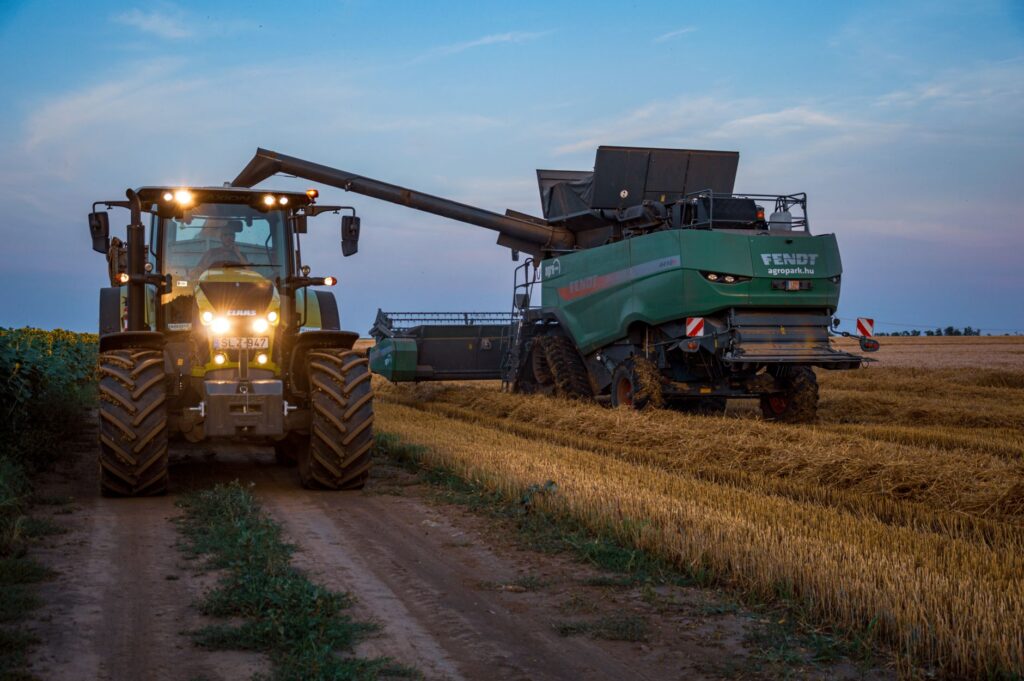
A combine harvester work light is a high-output lamp fitted to the header, cab roof, sides, unloader or rear of a combine to illuminate a specific task during night harvesting. Total work-lamp output on a modern combine sits between 60,000 and 120,000 lumens across 18 to 30 units, and the choice for each zone differs by lumen target, beam pattern and mounting position. This guide picks the right work light for each combine zone, compares LED against halogen for harvest duty, and lists brands across budget, mid and premium tiers.
What Counts as a Combine Work Light
A combine work light is a lamp fitted to a combine harvester to illuminate a working zone, not the road ahead. The lamp sits outside the road-lighting set (headlamps, tail lamps, indicators, plate light) and runs only when the machine works or unloads in low light.
Combine work lights differ from tractor work lights in three measurable ways. The lumen target per lamp runs higher, often 4,000 to 12,000 lumens against a typical 1,500 to 5,000 lumens on a tractor lamp. The beam pattern spreads wider to cover headers of 6 to 12 metres rather than a tractor implement of 3 to 6 metres. The EMC approval matters more, because every modern combine carries GPS guidance, yield monitors and CANbus electronics that a poorly screened LED lamp can disturb.
The road-lighting set on a combine sits in a separate category. Headlamps, tail lamps, indicators and the plate light carry ECE or E-mark approval and stay on during transport between fields. Work lamps switch off the moment the combine joins a public road, unless they sit below a certain height and angle that prevents glare into oncoming traffic.
LED Versus Halogen for Combine Duty
LED work lamps outperform halogen on combines across every measure that matters during harvest. The case for LED rests on five facts: lifespan, vibration tolerance, lumen output, current draw and colour temperature.
LED work lamps run for 30,000 to 50,000 hours of rated life. Halogen sealed beams last 500 to 1,000 hours. A combine working 14-hour days through a 6-week harvest racks up 590 hours per season. A halogen bulb fails inside that window. An LED lasts 50 seasons. Replacement labour up a 4-metre cab roof at midnight justifies the upfront LED premium by itself.
Vibration on a combine reaches levels that destroy halogen filaments within weeks. A combine threshing drum spins at 800 to 1,300 rpm. The shake telegraphs through the chassis to every mounting bracket. LED lamps carry no filament. The diode sits in solid resin, isolated from movement. Halogen filaments stretch, sag and snap.
Lumen output per watt favours LED by a factor of 4 to 5. A 70W halogen sealed beam delivers 1,200 to 1,500 lumens. A 70W LED delivers 6,000 to 8,000 lumens. The lower current draw matters when a combine carries 20 plus lamps. A full halogen set pulls 70 to 110 amps. A full LED set pulls 15 to 25 amps. The alternator and wiring loom on a 1995 combine cannot supply 100 amps to lighting. LED upgrades make the upgrade possible without rewiring the machine.
Colour temperature shapes how the operator sees crop quality. Halogen runs at 3,000 to 3,500 Kelvin (warm yellow). LED lamps sit at 5,000 to 6,500 Kelvin (daylight white). The cooler LED light shows crop colour, foreign objects and lodging more accurately, which reduces the chance of damaging the header or processing the wrong material.
Halogen still appears in two places on a combine. Some 1980s and 1990s machines from John Deere, New Holland and Claas use sealed beams that the factory parts catalogue still lists. Operators sometimes keep one halogen unit for cold-start visibility, because halogen lights at full brightness from the moment of switch-on, whereas a cold LED takes 200 to 500 milliseconds to reach full output. Neither point overrides the LED case for new installations.
Header Work Lights
Header work lights illuminate the cutting bar, the reel and the first 8 to 15 metres of crop ahead of the combine. The lamps mount on the header end frames and the centre stripper bar, and they aim straight ahead and slightly down to fill the cutting zone.
The lumen target per header lamp sits between 4,000 and 6,000 lumens. A 9-metre header carries 4 to 6 lamps. A 12-metre header carries 6 to 8 lamps. Total header lighting output runs from 24,000 to 48,000 lumens.
The beam pattern for the header should be a wide flood or an asymmetric spreader. A wide flood throws an even rectangle of light across the cutting width. An asymmetric spreader (sometimes called a stadium beam) puts more light to one side, which suits the leading edge of an offset header or a draper. A narrow spot beam is wrong for this zone, because it leaves dark patches between the lights at the cutting edge.
Mounting on a header uses M8 or M10 bolts through the steel end frame, or bolt-on brackets that wrap the frame tube. The lamp should sit clear of the reel arc and the gathering chain travel. A lamp clipped by the reel fails within hours.
Recommended units for the header zone:
- Hella ValueFit S700, 4,500 lumens, wide flood, ECE R10 approved
- LED Autolamps 16280 series, 4,000 lumens, flood pattern, IP69K
- Nordic Lights Scorpius N4404, 6,000 lumens, asymmetric spread, premium tier
Cab Roof Work Lights
Cab roof work lights throw illumination forward and to the sides over the full working width of the header and into the field beyond. The cab roof carries the largest single bank of work lamps on the machine, often 6 to 12 units across the front rail.
The lumen target per cab roof lamp sits between 6,000 and 12,000 lumens. A modern Claas Lexion or John Deere X9 series ships with 8 to 12 cab roof lamps. Total cab roof output runs from 48,000 to 144,000 lumens depending on machine size and operator preference.
The beam pattern at cab roof level should be a combo or hybrid: spot in the centre to throw light 80 to 120 metres ahead, flood on the outers to spread across the header width. A pure flood pattern at this height wastes light on the cab roof itself. A pure spot leaves the sides unlit and forces the operator to lean across the cab to see the header ends.
Mounting on the cab roof uses the factory roof rail, with M10 or M12 bolt holes and pre-drilled positions. Retrofit kits from Hella and Nordic Lights match the bolt pattern on John Deere, Claas, New Holland and Case IH combines. Aftermarket roof bars (Strands, OPTI-1) add 4 to 8 extra lamp positions when the factory rail runs out.
Recommended units for the cab roof:
- Hella Power Beam 1500, 7,200 lumens, combo beam, 70W draw
- ABL 800 LED, 9,000 lumens, combo beam, ECE R10
- Nordic Lights Canis Go, 11,500 lumens, spot or flood option, premium
Side and Side-Shake Work Lights
Side work lights illuminate the area beside the combine where chaser bins draw alongside, where the side shake sieves return crop, and where the operator checks straw walkers and returns auger output. The side mounts run along the separator housing and the cleaning shoe panels.
The lumen target per side lamp sits between 2,500 and 4,000 lumens. A combine carries 2 to 4 side lamps per side, for 4 to 8 lamps total. Total side lighting output runs from 10,000 to 32,000 lumens.
The beam pattern for side lights should be wide flood. The lamps sit 1 to 2 metres above the ground and need to light a 4 to 6 metre band running parallel to the machine. A spot beam at this position dazzles the chaser bin operator and leaves shadows along the side of the combine.
Mounting on the side uses bracket assemblies that bolt to the separator panel or the side covers. The lamps should swivel to allow aim adjustment, because the working line of the combine changes between bins, augers and walking checks.
Unloader Spout Work Lights
Unloader spout work lights illuminate the auger spout, the chaser bin or trailer below, and the grain stream during transfer. The lamps mount on the spout itself, on the spout housing, or on the cab roof aimed along the spout arc.
The lumen target per spout lamp sits between 1,500 and 3,000 lumens. One or two lamps cover the task. A single 3,000 lumen lamp aimed correctly lights the full transfer path. Two 1,500 lumen lamps spread the light if the spout swings through a wide arc.
The beam pattern for the unloader spout should be a tight flood, sometimes called a trapezoid. The lamp lights the trailer top from a height of 4 to 6 metres, with a soft edge that does not cast hard shadows from the spout itself onto the grain.
Mounting on the spout uses purpose-made brackets that allow the lamp to track the spout movement. A lamp mounted on the cab roof aimed along the spout arc gives a fixed light pattern that the operator points the spout into, rather than a moving light that follows the spout.
Rear and Engine Bay Work Lights
Rear work lights illuminate the area behind the combine for reversing in dark fields and for checking the rear shoe, the straw chopper and the chaff spreader during operation. Engine bay work lights illuminate the engine compartment for in-field service.
The lumen target for a rear work lamp sits between 1,500 and 3,000 lumens. The combine carries 2 to 4 rear lamps. Engine bay lamps run smaller, 800 to 1,500 lumens, fitted under the engine cover for service access.
The beam pattern for rear lights should be flood. A spot at the rear blinds anyone walking up to inspect the chopper or attach a sample bag. The flood spreads light across a working area of 5 to 8 metres behind the machine.
Mounting at the rear uses the factory engine cover brackets or aftermarket frames bolted to the rear corner posts. Engine bay lights sit inside the engine compartment on the inner panel, wired through the existing service-light circuit on most machines.
Picking a Brand and Tier
Combine work lights split across three price tiers: budget, mid and premium. Each tier carries trade-offs in lifespan, beam quality, EMC compliance and warranty.
Budget tier (GBP 25 to GBP 60 per lamp) covers brands like LED Autolamps, Maypole and unbranded eBay imports. The lumen claims often run optimistic. EMC compliance can be missing or self-certified. Warranty runs 1 to 2 years. Budget lamps suit a fast harvest fix or a second-hand combine on its last few seasons.
Mid tier (GBP 60 to GBP 180 per lamp) covers Hella ValueFit, ABL, Britax, VIGNAL and Wesem. Lumen claims match reality. EMC carries ECE R10 approval. Warranty runs 3 to 5 years. Mid tier suits most working farm combines, including machines from 2000 onwards with GPS and yield monitors.
Premium tier (GBP 180 to GBP 500 per lamp) covers Nordic Lights, Hella Power Beam, ABL 800 series and OEM John Deere LED kits. Lumen output runs highest. Beam pattern stays tight and clean over the full life of the lamp. Vibration tolerance and IP rating reach top specification. Warranty runs 5 years or longer. Premium tier suits contractor combines, machines under finance with residual-value protection, and operators who run hard 14 to 16 hour days through harvest.
Upgrade Routes for Older Combines
An older combine can carry modern LED work lights with three changes: lamp swap, mounting adaptation and wiring check.
The lamp swap replaces halogen sealed beams with LED units of equivalent or greater output. A 90mm sealed beam socket accepts retrofit LED bulbs from Hella, Osram and JW Speaker. A square halogen housing accepts a square LED replacement from LED Autolamps or Ring Automotive.
Mounting adaptation matches modern LED brackets to legacy hole patterns. Most LED makers list adapter plates for John Deere 9000 series (1991 to 1999), Claas Mega and Lexion early models (1996 to 2005), and New Holland TX and CR series (1998 to 2010). The adapter holds the new lamp at the original aim.
Wiring check confirms that the existing loom and switch carry the new amperage safely. An LED upgrade reduces total amperage, so the existing fuse and wire generally cope. Exception: when the upgrade adds extra lamps above the factory count, the new lamps need their own circuit with a 12V or 24V relay, a 20A or 30A fuse, and 2.5mm to 4mm cable.
A full combine work-light upgrade from halogen to LED costs GBP 1,500 to GBP 4,000 in parts, plus a day or two of fitting time. The investment pays back in the first harvest through fewer failures, better visibility and lower fuel draw on the alternator.
Related Articles
- The full combine harvester lighting setup covers road-legal lighting, beacons and total system design alongside work lamps.
- LED work lights explains LED work lamp technology across every agricultural application.
- Work light beam patterns breaks down flood, spot and combo beams in detail.
- IP67 vs IP69K compares ingress protection ratings for dusty harvest conditions.
- LED lights and GPS interference covers EMC compliance for combines with auto-steer.
- Harvest lighting guide walks through harvest-season lighting prep across all farm machinery.
- Shop the full range of universal LED work lamps suitable for combine retrofit.